
In which we navigate the Northwest coast in sub-optimal visibility, enjoy the culinary offerings of the Icelandic nearshore, and conduct some unorthodox bathymetric surveys in the Westfjords.
Fumbling through the fog
We pulled into Siglufjörður primarily to find a plumber. We’d been plagued by a blockage in the head since reaching Iceland, and various iterations of pump refurbishments and line cleaning had failed to resolve our shitty situation. Hence we’d been taking full advantage of cafe/hotel facilities whenever possible, and foraging for tools (“borrowing” exposed re-bar from various wharves) in order to chip away at the calcification in the holding tank and resume flushing. With a plumber on the way, and a gorgeous sunny day to wait for him, Nick perseveres. In his best imitation of the constipated mathematician*, Nick finally has the “breakthrough” we were after, the plumber is stood down and we are back to sea.
*he worked it out with a pencil
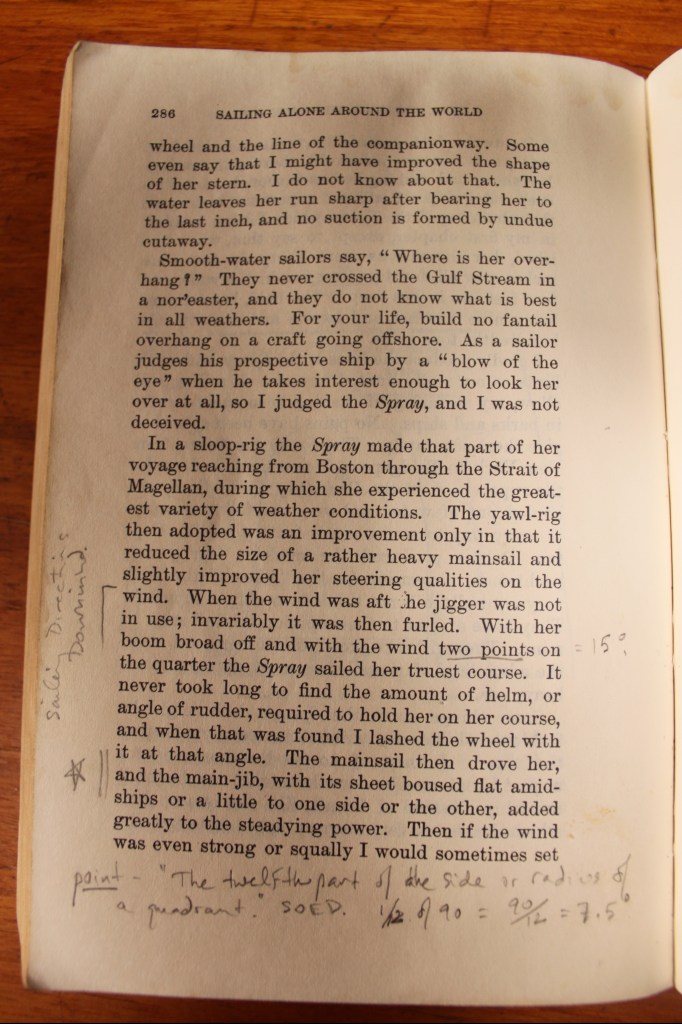
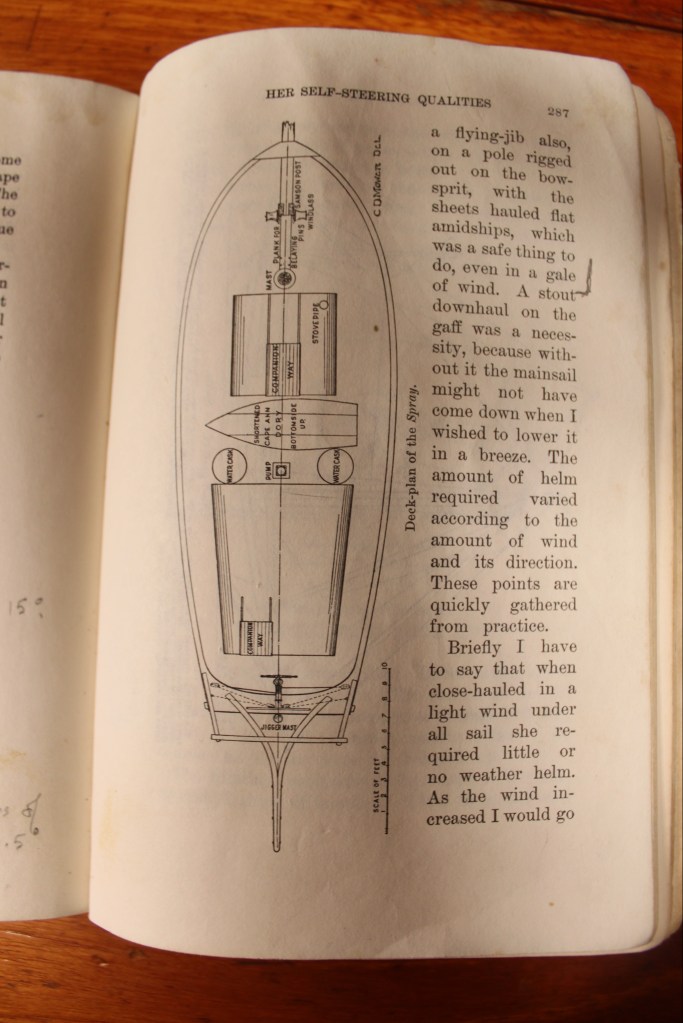
Out of the fjord we turn left, raising the main and genoa as the nor’easter fills in allowing us to make 310 (M), keeping us well wide of our needed course (290) to clear Hornbjarg, allowing a pleasant evening of whale watching and tea drinking. Before dinner, Nick and I have a play with the downwind self-steering as first described in Slocum’s Sailing Alone Around the World. Firstly, the genoa is backed using two inboard sheets (routed through the staysail blocks), centering the clew at the main mast, and the mains’l out wide. As the bow rounds up, pressure builds on the genoa, pushing her back down. Although nowhere near as deep as hand-steering, we can hold about fifty degrees off the wind, and everyone can sit down for a meal with a very steady and comfortable ride, and not the hint of a crash gybe. After our meal we return to normal head sail configuration, and get back on course, trotting along in the four knot range. The clear evening and low sun allow us our first glimpse of the snow capped peaks marking the westfjords. My watch from 0030 to 0230 is sublime, running downwind ~310 straight for Hornbjarg, the northern third of the sky aglow with neon pinks and oranges, underlighting the high cirri clouds and the half moon floating above the snowy peaks. The golden hour lasts hours at this latitude.
Hue comes topside at 0230 for her share of the champagne sailing, as a low cloudbank swoops towards us from starboard. By 0300 we’re in pea soup fog, eerie but beautiful. I head to bunk and let Hue enjoy all there is to see within a five boat length radius. Impeccable timing.
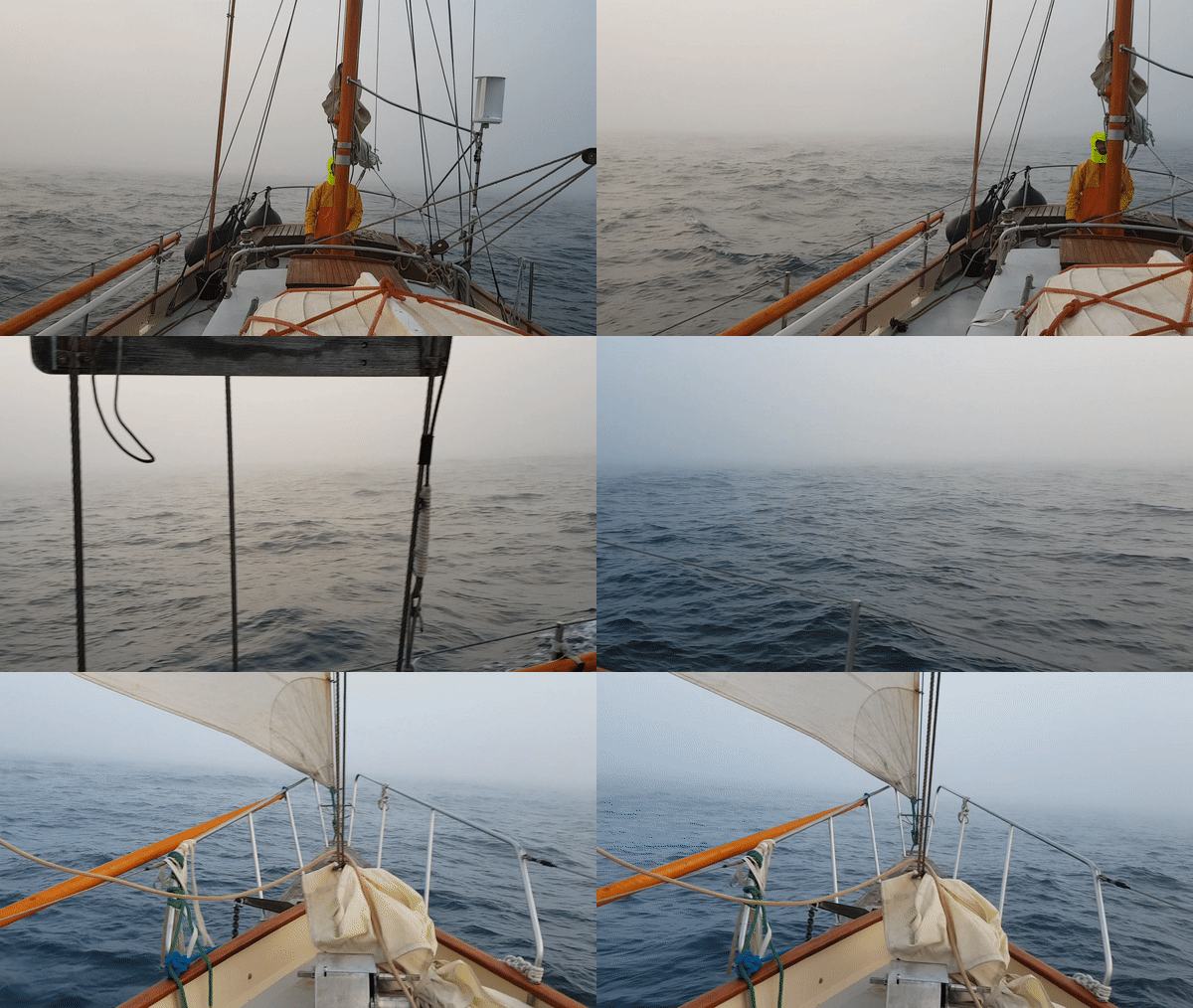
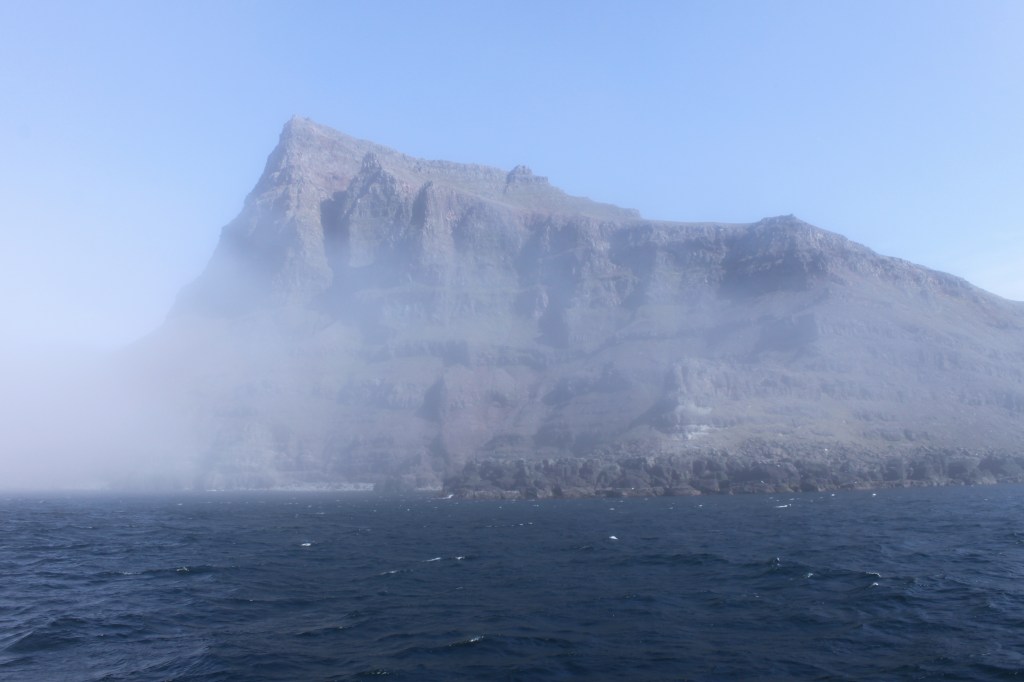
By 0930 the yanmar is running the show and the sails are down, as the breeze has dropped considerably and swung nor’west. Visibility is still two thirds of eff-all, and the air temperature has dropped with the visibility. Within an hour the wind has backed to the north and the main is back up. We’re holding a course of 320 (M), and GPS checks put us fairly close to an unseen steep and rocky shore. The charts indicate nothing to worry about with regards to rock or reef, so we carry on with a watching eye to port for any white water or darker solids. We round Hornbjarg by 1400 as the breeze has totally dissipated, leaving the fog behind. Sheer basaltic cliffs with boulders nestling at their feet are occasionally sighted, prompting a swift veering to starboard, and Diomedea crosses our bow heading into Hornvik. We didn’t see them until they entered our five boat-length bubble, but I’m later gladdened to hear that Teddy’s 10 mm steel shone bright on the Australian radar. We’re motoring west towards Fljótavík, some ten miles away, surrounded by nothing but mist and multitudes of muted birds.
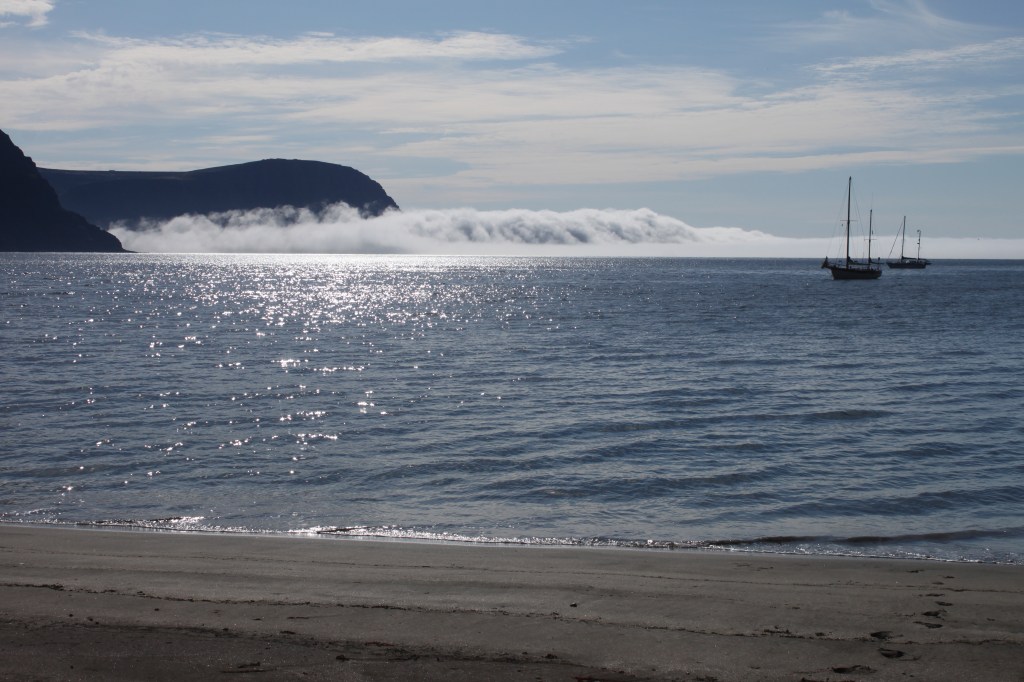
We break out of the fog bank into clear blue skies over a gentle sandy beach, the vast glacial landscape behind draped in green with accents of purple and yellow wildflowers. Pretty damn pretty. We drop anchor close to shore in four to five fathoms, and row ashore to wander barefoot in the sunshine and sluice away the dreary fog-filled hours. We encounter a local fly-fishing (not yet successfully) for sea trout at the stream mouth, and stumble over wild peas strewn throughout the dunes. Damn pretty, paradisaical in fact. Our grins are large and our walking aimless. Hue and I row across to Pangey (a Moody 42′ centre cockpit ketch) later in the evening, to meet Mike Henderson and Helen Gould of the UK, via the Faroes. They’re heading for East Greenland (Scoresby Sund being the main goal, and Mike is working on a cruising/pilotage guide for all Iceland and Greenland; a good guy to meet. We sip gin and tonic while trading foraged sea rocket for scones with Faroese rhubarb and ginger jam, and discussing past and future endeavors. I’m sure we’ll meet again.
Wild Kai – foraging for a feed
Although Teddy’s bilges and lockers were well stocked in Skibbereen, and replenished in Djupivogur, we supplemented purchases with wild foods from the sea and land, enjoying the connection to the place via consumption of our bounty. Great fun foraging, and getting creative in the galley – how many ways can cod be cooked?
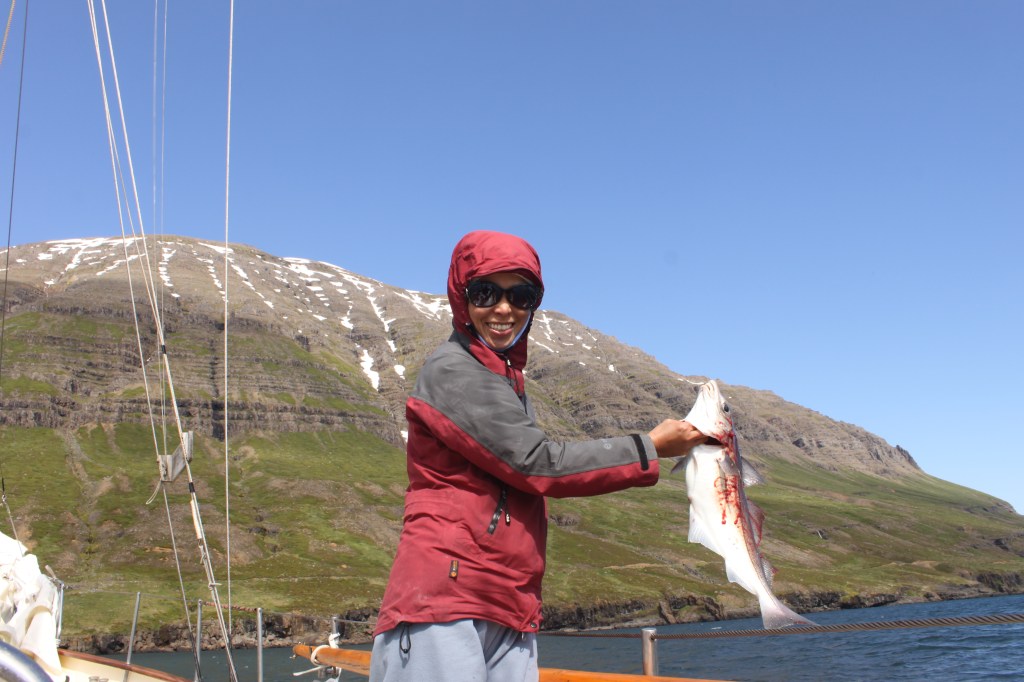
Atlantic cod has long been a mainstay for Iceland both nutritionally and economically. Indeed the Cod Wars, consisting of three “militarised interstate disputes” between Iceland and the UK, were a direct result of the value of this fishery. The cod sure treated us well, jumping on our hooks at a moment’s notice. It was all we could do to hold Hue back from reeling them in all day; the cure was lifted, and she was making up for lost time. In a Forest-Gumpian manner, we had cod many ways: fried, baked, steamed, in soup, dried, smoked, and pickled.
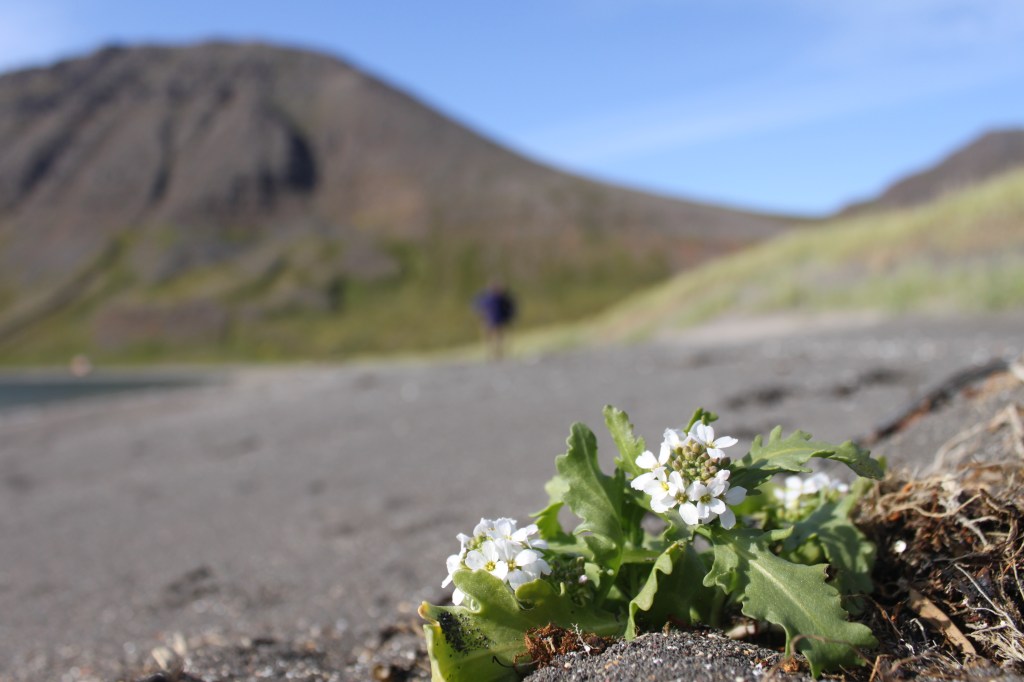
We frequently gathered “sea rocket” (genus Cakile) from the Icelandic beaches. In Nick’s experience, higher latitudes equaled a lesser mustardy character; near-unpalatable in Ireland, this was delicious either raw in a salad, or lightly blanched in Iceland. Any excursion ashore we’d return with a bag or two of it, and it kept well in the bilge fridge for 3-4 days.
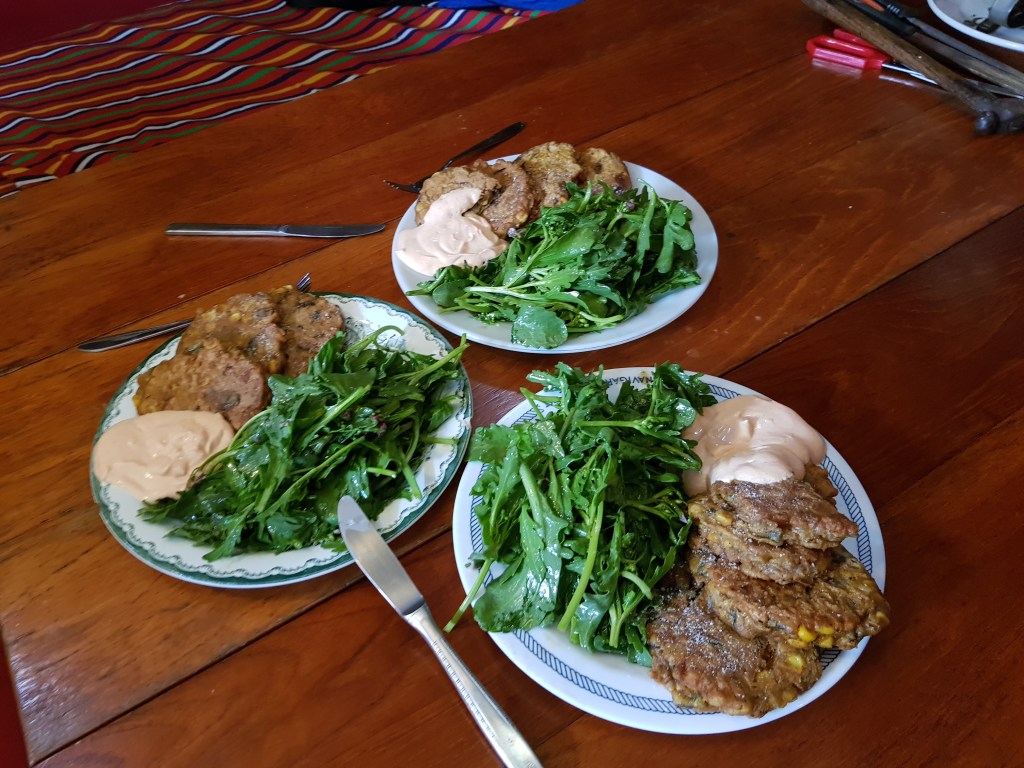
Beach peas were past their prime when we found them in Fljótavík, but I’ve since found them in abundance on St Pierre et Miquelon (another story). When ripe they’re as sweet and succulent as any garden pea, although more labour intensive due to their size.
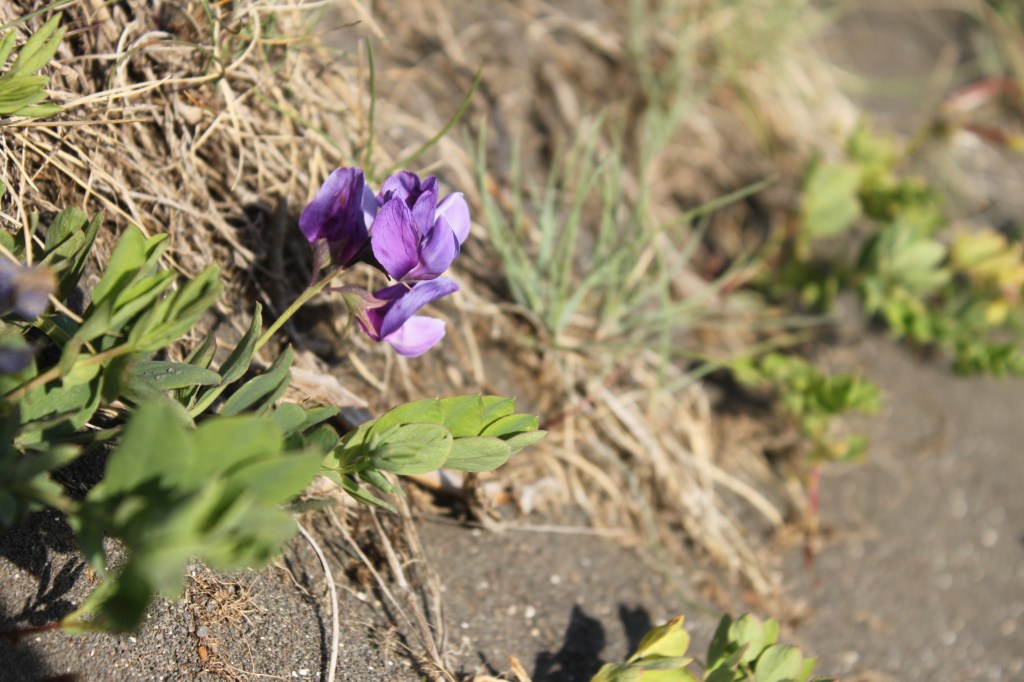
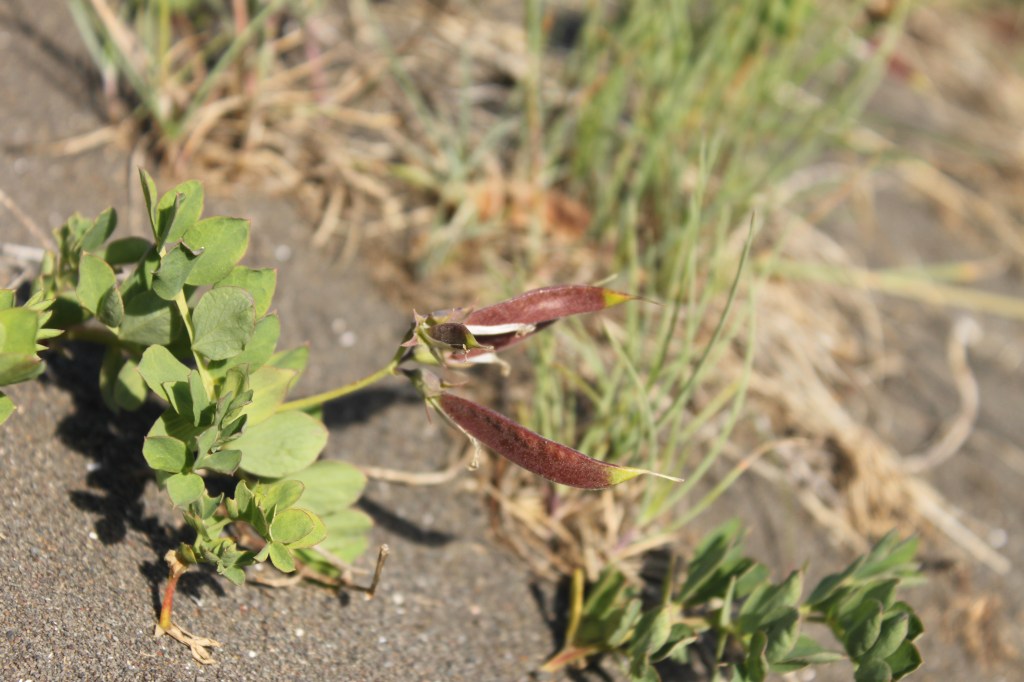
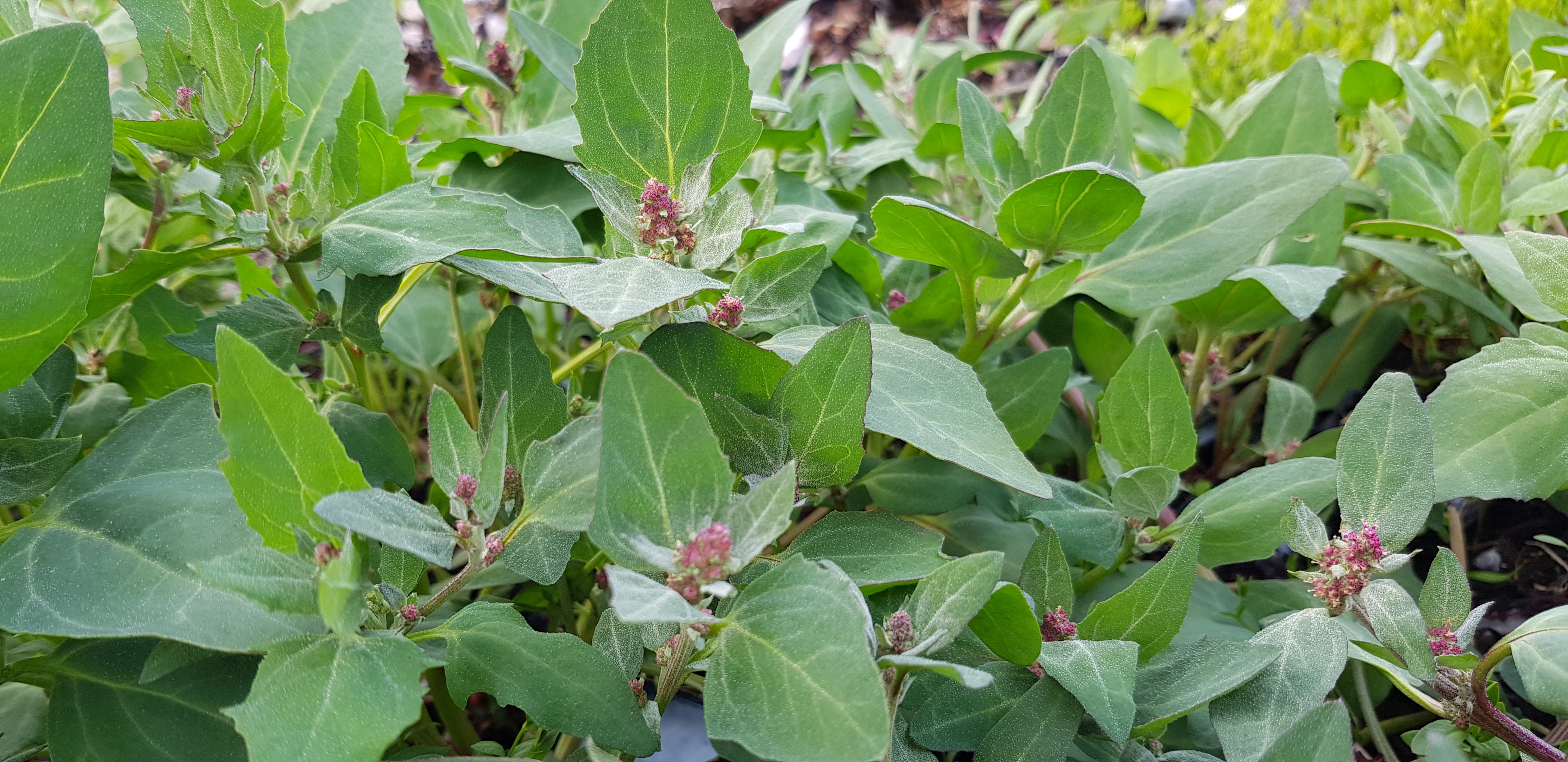
Sea/wild spinach was another favourite of ours, definitely in part due to the lack of good fresh greens for most of the trip. We’d find masses of the stuff, and eat it by the sackful, either cooked or raw.
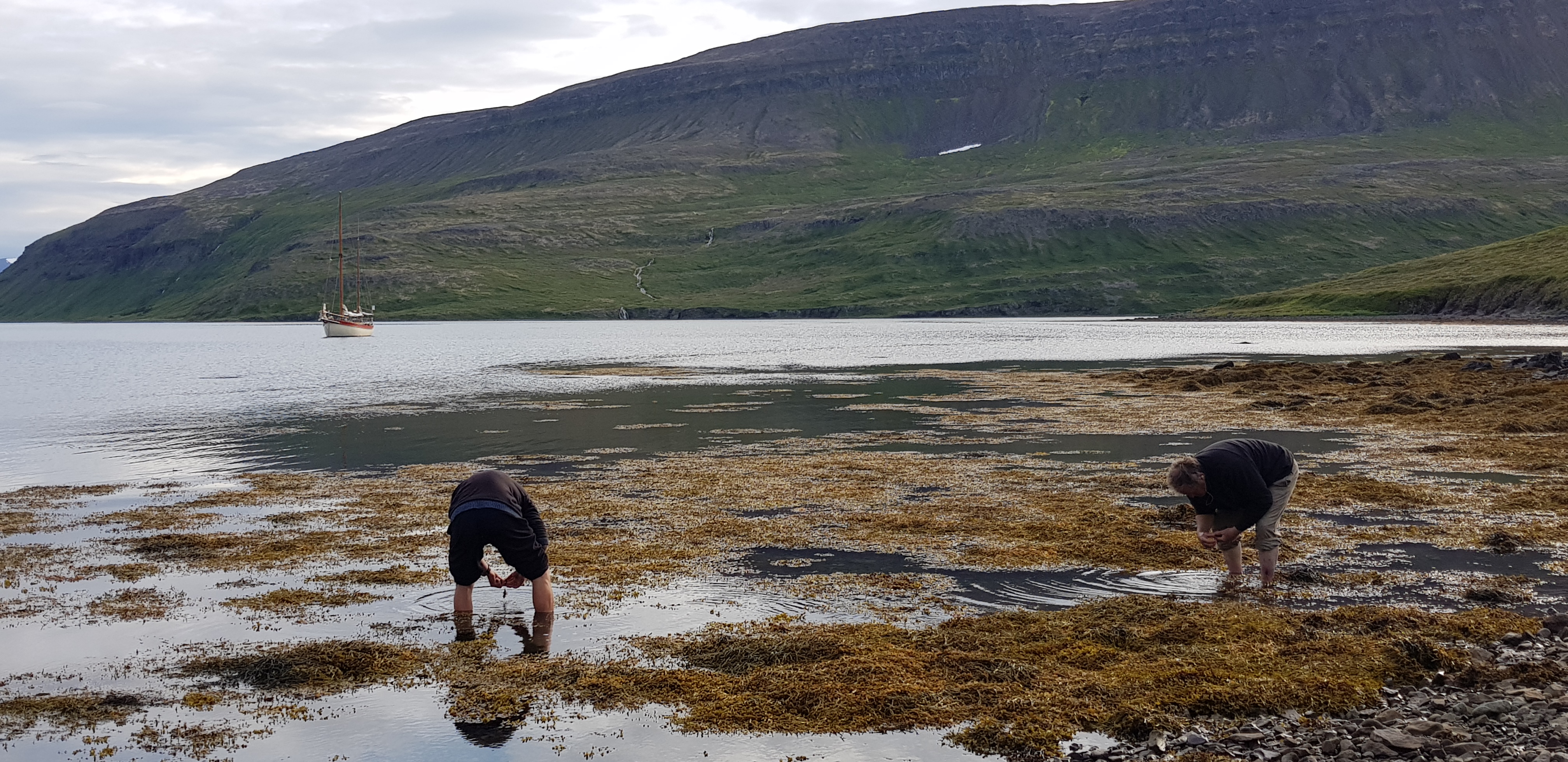
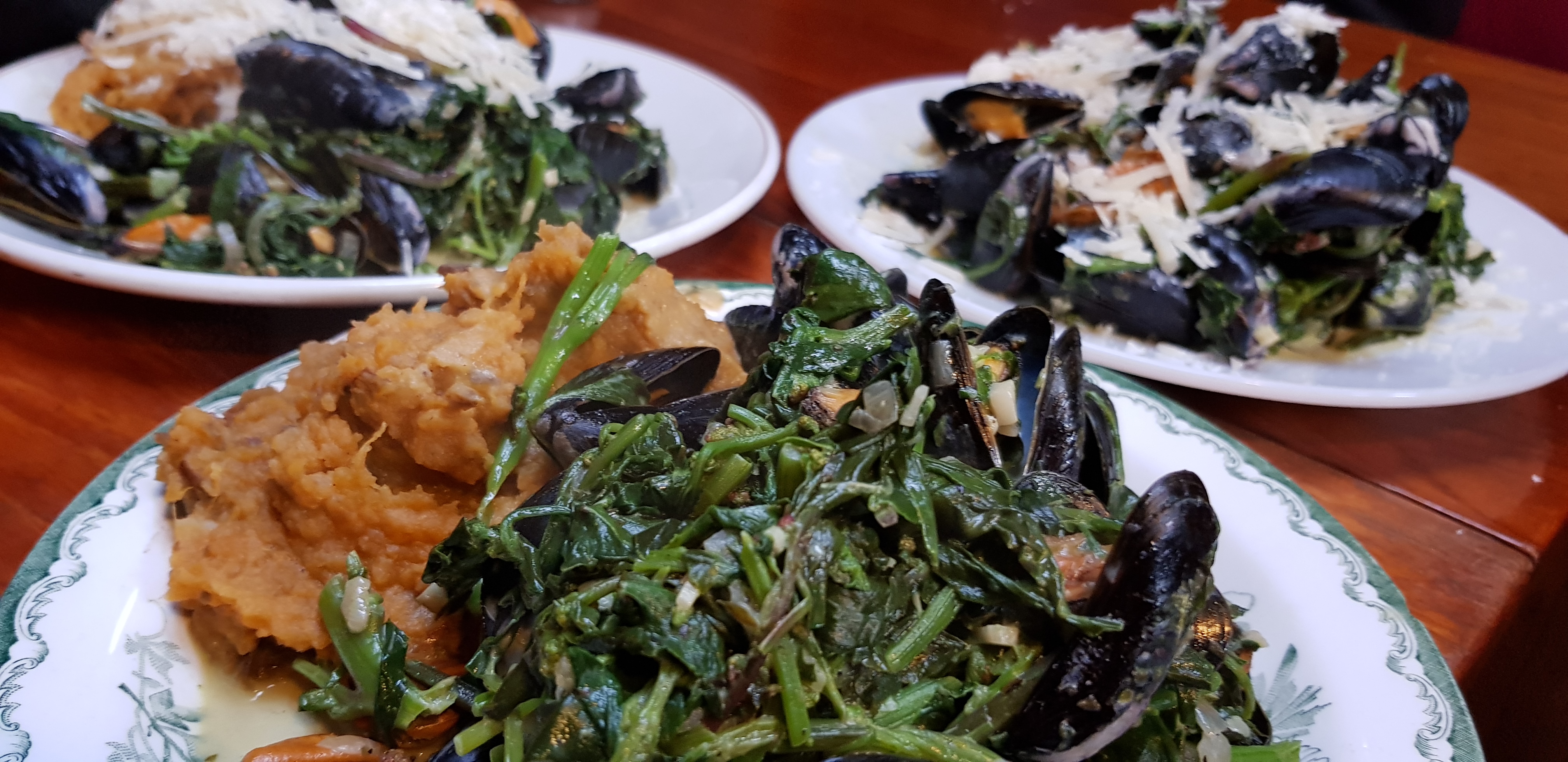
Harvesting mussels is less pleasant in Iceland than it is in New Zealand, the water temperature being considerably lower. Nevertheless, we managed to gather a bucketful of blue mussels (Mytilus edulis) in Lónafjörður, our numb feet wincing in protest as we walked back across the angular beach stones. As with the peas, a low CPUE (catch per unit effort). These ain’t your fat NZ greenlips. A much welcomed addition to our protein options, a 20 litre bucket fed the three of us once.
Stuck in the mud. Or, how to clean a keel and buff a prop-shaft
Teddy’s heirloom depth-sounder hasn’t found the bottom since at least the end of June, and her 21st century crew were back to first principles: the lead and line. Our anchoring procedures are fairly well oiled by mid July, generally with Nick at the helm, I on the foredeck swinging the lead and signalling depths (shouting not too useful for Nick remember), with Hue keeping eyes on the wider situation. With relatively small scale charts on board, and a lack of survey data for the inner fjords, softly-softly is the name of the game. Teddy draws 6 feet, my arm span is about 6 feet, a fathom is 6 feet. Sometimes the imperial system has its merits. Approaching a likely spot at idle speed, I swing the lead ahead, let it reach the bottom, then haul in counting off the fathoms – any more than nine and we’re not too interested, as the primary anchor chain is only 55 m (~ 3:1 warp). Anything less than two fathoms and we’re very interested. Goldilocks lives between two and nine fathoms deep. After nominating our drop point, we then circle the area, sounding out the likely swing-room. All good? Drop the pick and put the kettle on. In most places the water is clear enough to see the bottom at three fathoms, so it’s pretty straight forward; the devil is in the detail.
After a morning scrambling the hills of Lónafjörður, and refilling the sea spinach stores, we mosey across to Leirufjordur, aiming to get as close to Drangajökull as possible. Using the lead-and-line we successfully navigate the low point of the eyri – the submerged terminal moraine left from previous glacial extent – and enter the murky waters of the fjord proper. Meltwater from the glacier carries a high silt load, rendering our eyes as useful as the proverbial tits on a bull, if said tits were intended to identify a shoaling sea bed. Our charts indicate a considerable shoaling within the head of this fjord, although the location is uncertain, and likely to have changed proportional to meltwater/silt inputs from the glacier. On this basis we’ve taken the prudent approach of entering on a rising tide; if we get stuck the tide will help rather than hinder our situation. We can be bold.
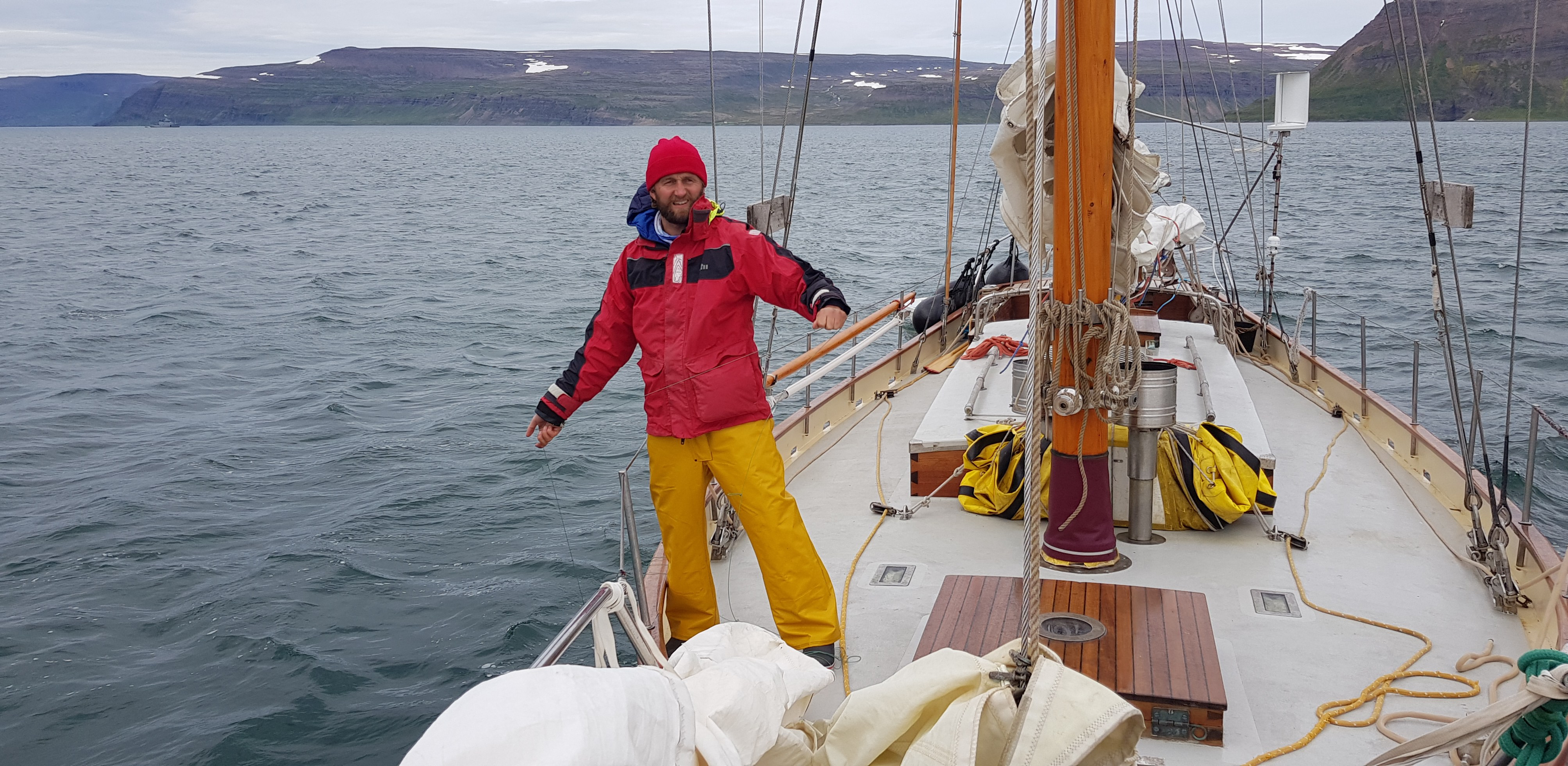
Too bold.
Four or five boat-lengths before, the lead wasn’t finding the bottom at nine fathoms. Now, a different chunk of lead has found the bottom. Teddy’s keel. We’re firmly gripped in the soft embrace of glacial silt. Great. Nick launches the dinghy as I hurriedly connect a spare anchor to one of our longest lines. Nick rows as far astern as possible and drops the anchor, Hue and I winch onto it until the line is bar-tight. It takes two tries to set the second anchor, but within ten minutes of kissing the bottom we’ve got an anchor off each quarter, aligned so as to pull us deeper as the tide lifts us. A slight rocking indicates the tide is doing just that, we should be afloat within the hour.
It’s a well known fact that mistakes aren’t made without witnesses to observe, like a silent tree falling in an empty forest. The first time we ran aground, in Silgulfjordur, we had plenty of onlookers. Here, in the middle of the west fjords, you’d assume we’d be free to misadventure to our hearts’ content. We’re not. An Icelandic family, holidaying in their beachside cottage, has watched events unfold. Father and son are now coming to our aid, driving a 20 hp dinghy with the wavering uncertainty of those who boat but once a year. Their English is better than our Icelandic, but worse than Nick’s hearing. While we don’t need their help, we can’t communicate (politely) that we’d rather just wait. A mixture of hand gestures and monosyllabic shouting, and we’re rigging a halyard from the top of the main mast for the locals to heel Teddy over and pop her keel out of the mud. With multiple lines over the side, and several excited parties involved, it’s smart to move slow and assess each change in situation. I’m DUMB right now. As the tide continues it’s inevitable rise, so does Teddy. A discernible rocking indicates she has wriggled free of the silty clutches, and is afloat once more. I spring to action, running after and knocking the idling yanmar into reverse, pulling us to deeper water. Why the rush? I’ve only overrun an anchor line in my haste and wrapped the prop. MUPPET.
Kill the engine, the local dinghy is holding us in the deeper water. Time to fix my cock-up. Nick hands me up a 1970’s era mask and snorkel as I strip to my undies; over I go for a look. Faaaarrrk it’s cold! And I can’t see shit. Probably something to do with all that glacial sediment, eh? At least there’s no Leopard seals around these parts, not like Westhaven marina. Seeing with my hands, I confirm that the prop blades are clear, the line is wrapped around the shaft between the stern-gland and the propeller. Doesn’t feel like we’ve (the royal we; me) bent anything, and I might be able to salvage the line. However, with the anchor holding firm, that’s not happening right now. Nick passes the boat hook down, I guide it (blind) onto the line in an attempt to retrieve it. Not yet. A spare jib sheet dropped to me is tied around the line, and I climb up the rudder-ladder with yellow-white fingers and toes. Faaaarrrk it’s cold! I’m thankful for once that there’s no breeze on. As the locals tow us out to deeper water I retrieve both anchors on board, and pull in as much of the wrapped line as possible. No pissing around with floats and further retrieval efforts at least. We drop anchor in 8 fathoms, deep enough to comfortably sail off if necessary. I go below to warm up as Nick and Hue tidy up the chaotic topsides.
Post swim anti-hypothermia protocol. Ingredients: towel, sleeping bag, hot water bottle, 3 x cups of tea, 1 x bowl of noodles, rum. Method: strip, dry, enter, drink x 3, eat, drink. Let rest for 30 minutes, or until colour returns to extremities.
Time to relax and regather. I’ll jump in again tomorrow for a look (viz permitting), although that’ll likely need us to be out of this fjord. The engine’s out of order until I undo that wrap, and I’m determined to salvage the line if possible, as partial recompense for my hasty mistake. In the worst case, we’ll sail across to Isafjordur and deal with it there. Maybe I can find a wetsuit to borrow. Scrabble: Nick – 303, Hue – 166, Josh – 148.
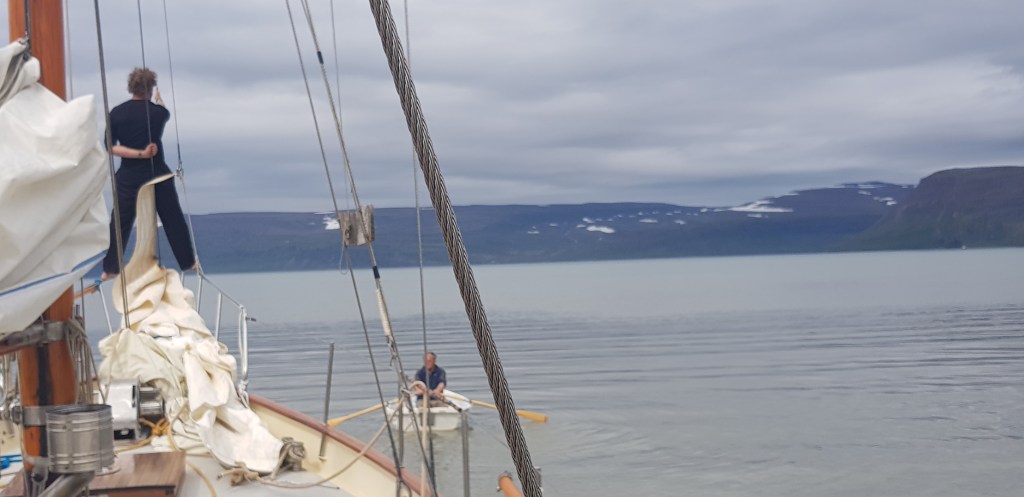
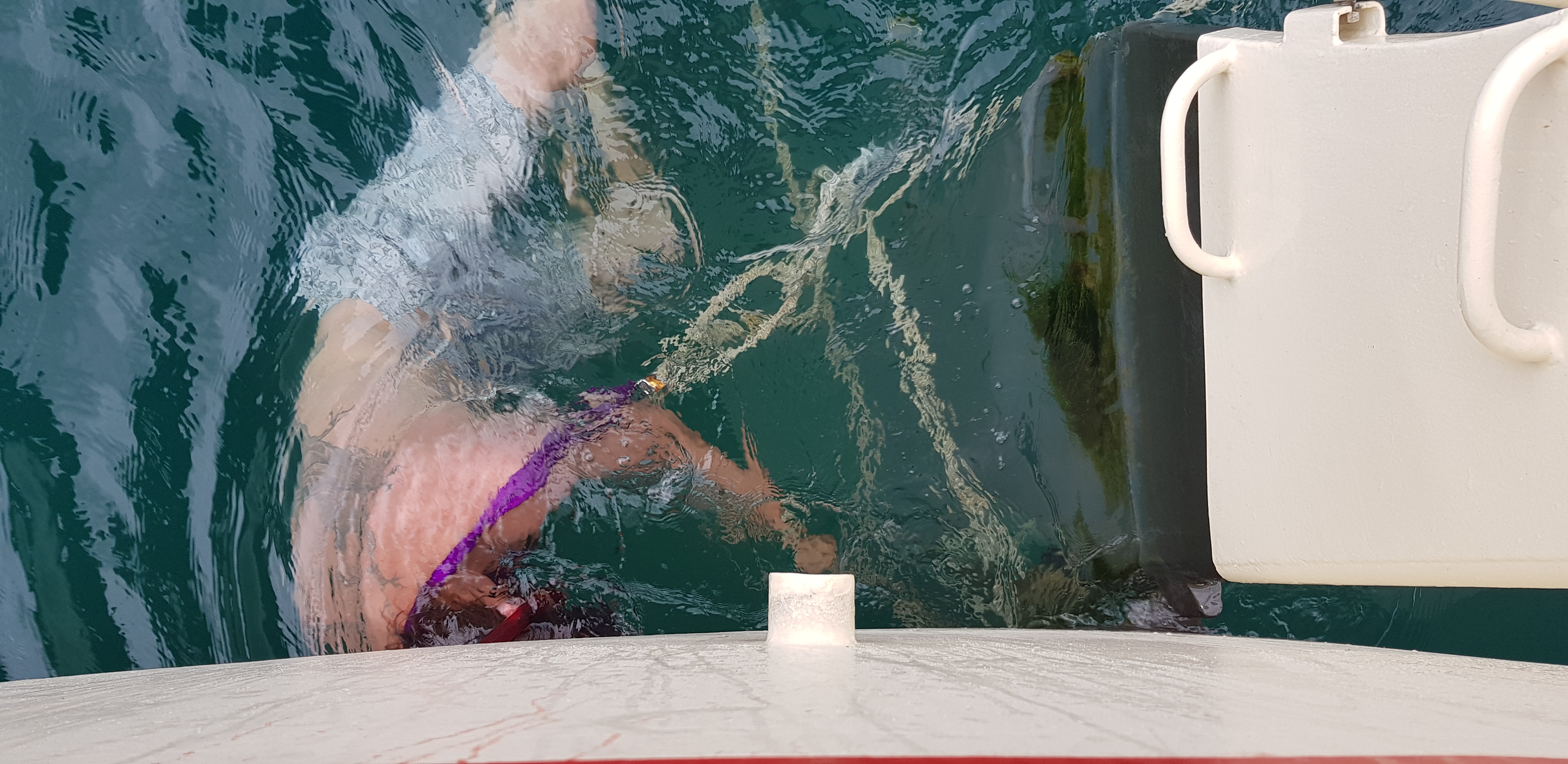
We’re totally becalmed in the morning, and there’s no way I’ll see anything in the soup we’re sitting in. Nick ruminates on the idea of towing Teddy out with the dinghy, as we settle in for another game of scrabble, fueled by large quantities of popcorn; Nick – 244, Hue – 206, Josh – 196. We attempt a tow at 1400, Nick in the dinghy rowing, I standing on the pulpit signalling directions to keep the line straight, Hue providing encouraging noises. We gain an estimated 300 m over the hour, until the tide turns and we’re forced to drop the pick and return to the scrabble table, each of us taking turns to hurry topside at the first (real or imagined) hint of some puff. Finally it comes, the lightest zephyr wafting off the glacier, giving us a downwind drift out of the fjord. Abandon scrabble (Hue – 255, Nick – 244, Josh -166), weigh anchor, hoist sail. We’re off! Just. We inch our way down the fjord at an appropriately glacial pace, playing the shifty air and ready to drop the anchor at the first hint of a reversal. These are the conditions where you win or lose a race. Once across the eyri we’re in crystal water, plenty of jellyfish inviting me in for a look at what I’ve done. Funnily, it takes a little longer to psyche myself up for another dip. We heave to and I gear up, adding a safety line around my chest (for Hue to yank on when she decides I’ve had enough of the cold), and a flathead screwdriver tethered to my wrist. Faaaarrrk it’s still cold!
I can see though. And what I see is not pretty. The entire length of the bare shaft is tightly wrapped in two layers of rope. It’s like a Gorilla wringing a banana’s neck with both hands. It takes a good minute to pry off the first coil of rope, bending the screwdriver in the process. After that it’s just a matter of feeding the free end of line through the gaps and pulling it clear. After a couple of minutes the first layer is completely off, but I’m starting to feel the cold. Maybe I’m running on less adrenaline today, but I’m hyperventilating, shivering, and the functionality of my hands is declining. This second layer is wrapped even more snugly, I can only pry it out a quarter inch at a time. I’ve almost freed the first coil when I finally relent to Hue’s insistent tugging on the line. You’ve had enough Josh. Back aboard to cook up some body warmth. We’ve finally got some breeze, so we’ll make for Ísafjörður (~ 22 nm) and I’ll tidy up in the morning.
The breeze has filled in, bringing a fairly dense fog to fill the fjord. We’re four sail tacking up the fjord, going about when the cliffs rear into view some ten boat lengths away. Fantastic sailing in gloomy diffuse light, we spot a humpback off our bow, and there’s birds everywhere. Beautiful conditions, fast sailing, we’re forgoing watches tonight. No. Sleep. Till. Ísafjörður. Try rapping that, Beastie Boys. Once out in the fjord prop we bear away on a magnetic course of 205, running flat down a shifty breeze. Around 2300 we’re in the middle of Ísafjarðardjúp, obviously a whale highway with four or five humpbacks blowing, breaching and diving within the space of twenty minutes. Big stupid grins and competitive spout-spotting stares all around as the lights of Ísafjörður come into view. The breeze drops steadily as we get closer to port, and it’s looking unlikely that we’ll make it to Pollur (the inner harbour) tonight. Without the yanmar in play, we don’t want to drift or anchor in the busy traffic lanes, but we’re having trouble finding an anchor-able depth with the lead. Those glaciers sure did a good job of gouging out a decent channel. We finally spot a mooring tucked in behind a salmon farm at a rather unfavourable angle in the dying breeze. Luckily Teddy doesn’t subscribe to any fad diets, and her momentum lets us gracefully glide up to the bouy. Hook, lift, tie, secure. All to bunk at 0300, outside the Ísafjörður seawall, appreciating the ease that 24 hour light gives all operations.
After breakfast on the 14th of June I jump in for one last swim, retrieving the line after 2.5 minutes, and confusing the hell out of the passing cruise ship passengers. Eh, it’s technically summer, and I haven’t had to cut the rope. A gentle turn over of the yanmar while checking the stern gland for leaks, and we motor in to tie up alongside the wall, next to both Diomedea and Pangey, with plenty of time for coffee, doughnuts and beer before the new crewies arrive.
Now, can I carry on for the Greenland leg and still make my next commitment in Woods Hole, MA? Or is this where I say goodbye to Nick and Teddy?
 Rum, Salt and Bullshit
Tremendously interesting reading while we are waiting for the Spring !
Intrigued by your cooking at sea on greenery available. We must try that.
LikeLike
Thanks Niels, where abouts in Iceland are you? Yes, the greens were great, a welcome supplement to our stores on board. Enjoy!
LikeLike
Not quite in Iceland but in Denmark. Waiting to go to Norway when better weather comes around.
Hope to try sea rocket this Summer.
And to hear Nick’s presentation sometime before we take off.
LikeLike