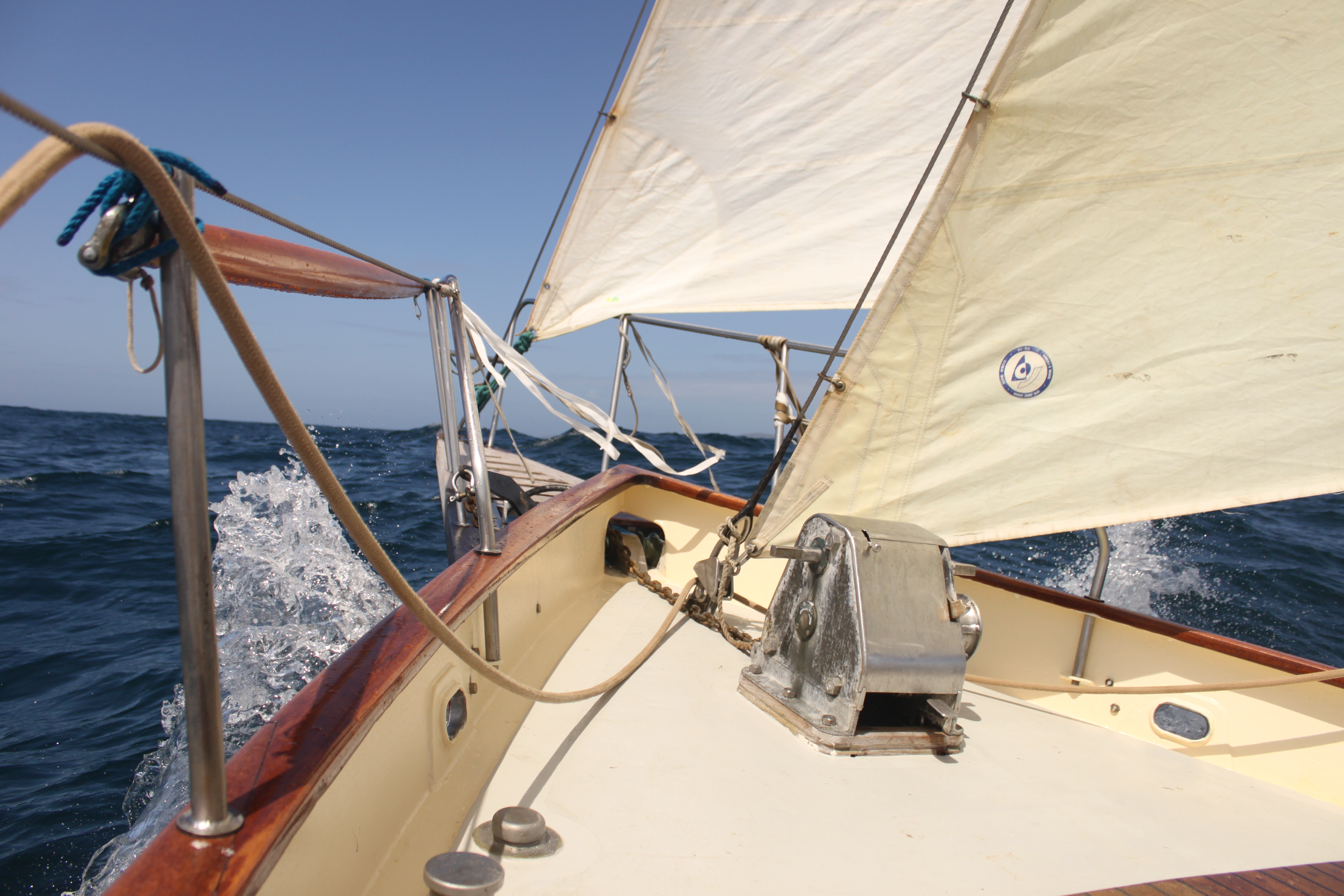

In which we sail Teddy from Baltimore to Clifden, up the west coast of Ireland, with French chef stowaway on board. I’m introduced to the dark arts of self steering via sail balance, and fall head over heels (pitchpole, if you will) in love with the ketch life. The Irish summer dismally fails to live up to it’s dreary connotations, and I laugh my ass off at my first sighting of the comical puffin trying to fly; as strong an argument as I’ve seen against the existence of an “intelligent” designer. But first, some introductions.
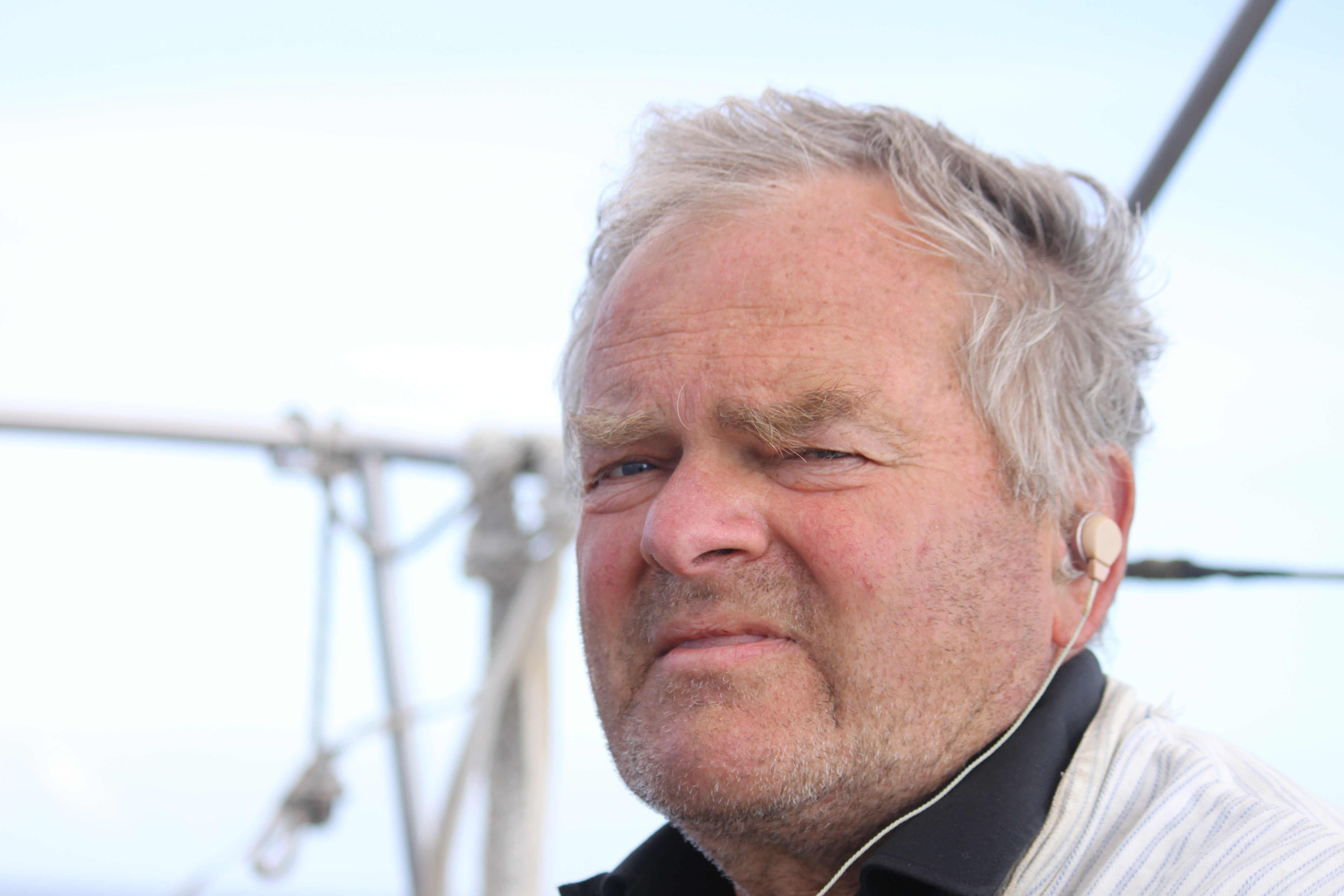
Dr. Nick Kats
I met Nick in the modern way, online, via the Crewseekers site. His advert started with “Seeking crew for Arctic cruise.
Round trip from West Ireland to East Greenland. 15 June – 20 August…”, I was hooked. Nick is an American ex-carpenter, naturopathic doctor, born in France and living in Clifden, Ireland. He’s been sailing for around 50 years, and has owned the mighty Teddy for the past 12. Eschewing warm climes and crowded bays/marinas, Nick’s preference is “to go north, to empty seas, less civilization, 24 hour daylight, more wilderness“. He’s got a keen interest in, and broad knowledge of, the history of the North Atlantic region, including wandering Irish monks, viking explorers, and marauding Algerian pirates. His vast knowledge of edible and medicinal wild herbs is something I look forward to learning more about, and he makes a mean salad from whatever can be foraged in the bilge-fridge.
First impressions can’t fail to notice Nick’s deafness, but it is by a far a defining feature of his life or communication. Nick was born deaf, and currently has < 1% “normal” hearing. Raised without sign language, Nick hears via lip-reading and a fairly old hearing aid. I’ll admit it took a little getting used to, but it’s really no problem whatsoever; I find myself unconsciously turning my face to him whenever I’m speaking. The shared practical language of sailing and hand-signals across a wind-swept deck are fairly universal. Nick is a hugely experienced, old-school sailor. I’m learning a heap from him already, and sure there’ll be much more. There’s also whispers of a Northwest Passage attempt sometime in the future…
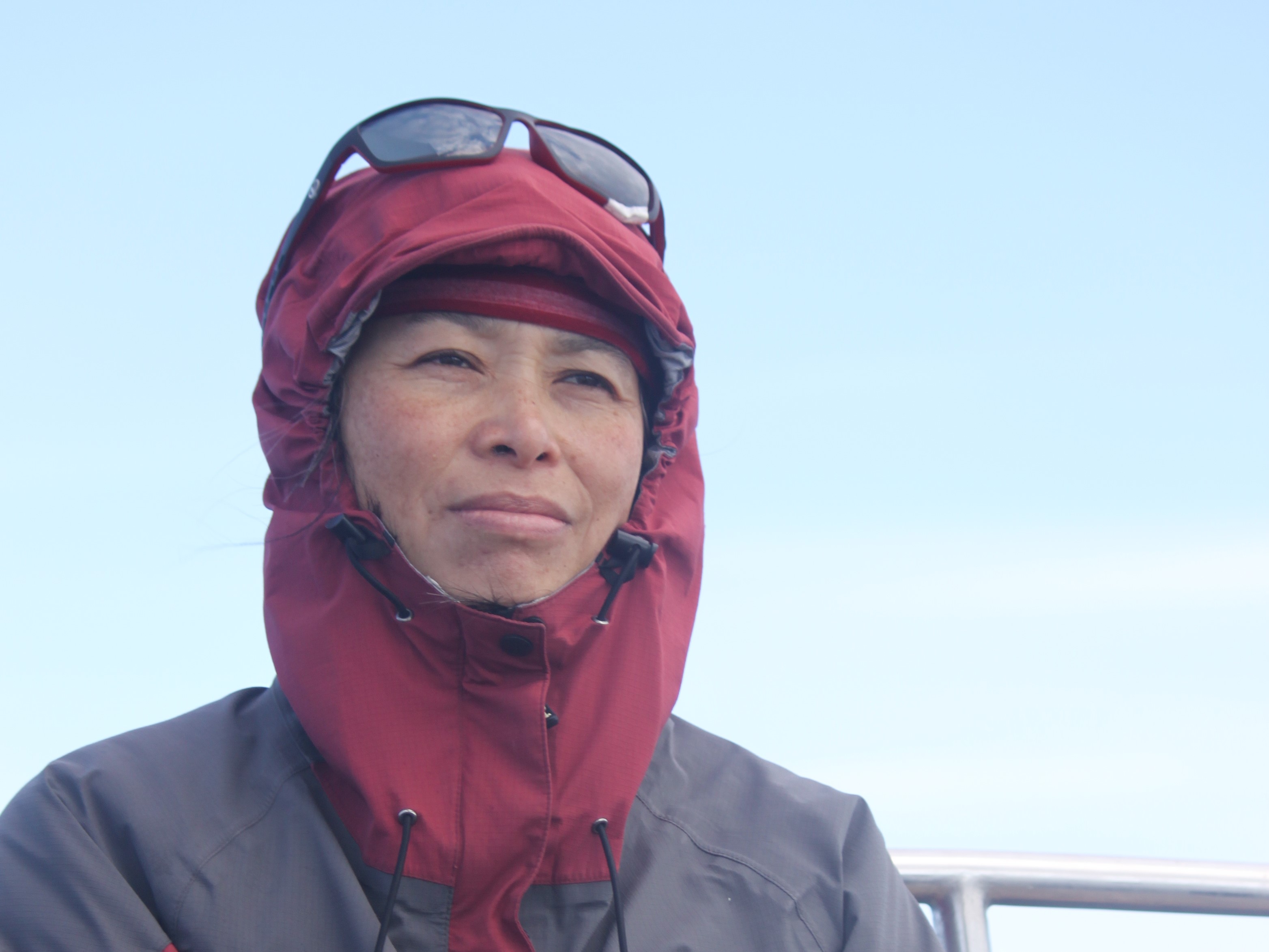
Hue Tran
I worked with Hue at Scott Base this past summer, where she was one of two science technicians. Hue’s a true citizen of the world; Vietnamese-Australian, via the UK and Antarctica, having served two seasons with the British Antarctic Survey (including a full summer/winter/summer – 15 months on ice) at Halley station. Hue joined this current adventure on fairly late notice. She’d just completed her first sailing passage from New Zealand to French Polynesia, and was loitering in Tahiti waiting for confirmation of another Antarctic gig. For better or for worse I put her in touch with the Pirate of Huahine, Te Are Nui (a good friend from my university days), and she spent a few days helping out on his vanilla plantation. Having heard good things about Icelandic cheese, Hue was quick to sniff out a spare berth aboard Teddy, and flew to Ireland via Paris to join us. She flies straight back to New Zealand mid-July, to redeploy to Scott Base for a 13-monther from August.
At less than 50% of either Nick or I’s “fighting weight”, Hue is our designated rig-rat; It’s a shitload easier hauling her to the top of the main mast. A techno-whizz, Hue is slowly working on Nick to upgrade to both a smartphone, and a hearing aid from this millennium. Hue has a keen sense of humour, and a keener appetite, if she only eats as much as Nick or I (at twice her size) there’s something off; a real-life example of Kleiber’s Law –
if q0 is the animal’s metabolic rate, and M the animal’s mass, then q0 ~ M¾.
Pierre Couture (le passager clandestin)
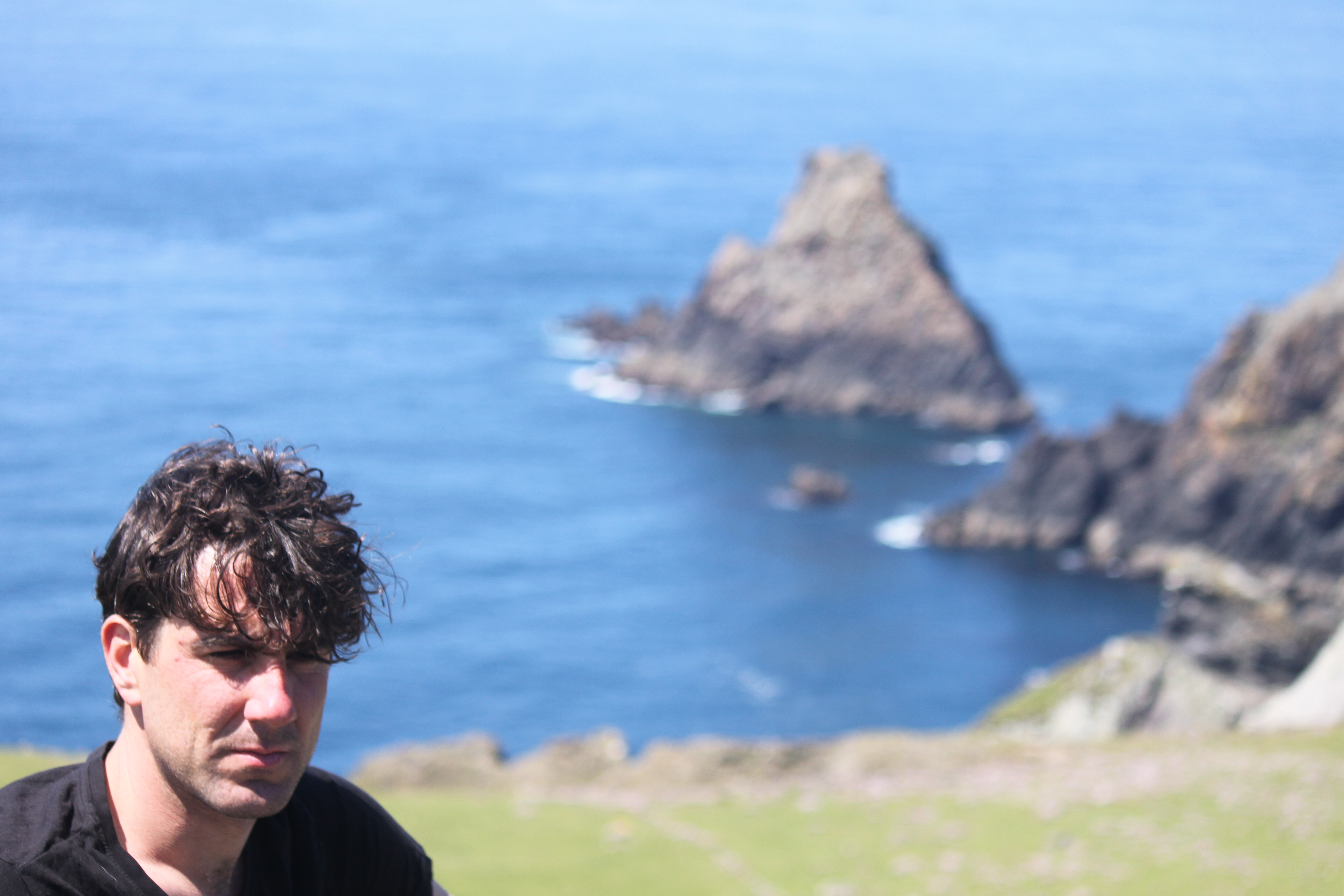
I don’t know much about Pierre, he’s a man of mystery. Purportedly an ex-chef, he didn’t cook a single meal aboard Teddy… Pierre has been working alongside Nick Kottler at Heggarty’s, unofficially apprenticing in boat-building. Pierre had never sailed before, but joined us for the West Coast cruise from Baltimore to Clifden, of which more is written below.
Monday 17 June – 0400
We cast off from the Baltimore pier (concrete wharf, not french stowaway) at four in the morning, daylight already dawning at this latitude, and motor out into the Atlantic. It’s not long before we sight the infamous Fastnet light off our bow. Another piece of yachting history, not to mention an engineering marvel – how the hell do you build a tower on that wave battered rock? We skirt between reefs as we shoot the gap between Sherkin and Clear Islands, then hoist three sails; the main, mizzen and genoa. A note about sail handling on Teddy – all halyards, topping lifts and reef lines run to the mast/boom, thus all changes (excepting mizzen) require exiting the cockpit. Heading directly into the wind, we’re sheeted in hard, but the sail aloft eases the rolling.
Throughout the morning we slowly head to the west as the breeze fills, until finally we’re sailing! We set the staysail as well, and with all four sails full we reach for the West Coast. Here, I have my first revelatory experience aboard Teddy – she keeps her own course, no autohelm, wind-vane or wheel lashing in sight. Nick had told me about this previously, but’s its surreal to experience. Setting the main and genoa slightly contradictory to each other, the sheeting of the mizzen determines our course. As she rounds up into the wind, the mizzen luffs and the tight genoa pushes the bow down. Falling off the wind, the main powers up and the mizzen pushes the stern down. Want to come up a few points? Trim the mizzen in. Bear away? Ease mizzen. It’s incredible. She wavers no more than five degrees either side of our bearing, and the balance is such that two fingers on the wheel can adjust this sixteen ton beauty. Combine this with the fact we have no wind instruments or speed gauge, and it’s a pure expression of sailing, listening to sea, wind and boat. Teddy whispers “give me breeze abeam and I’ll take you where you want to go. Relax. sleep if you want. I’ve got this”.
We lunch as we pass through Dursey Passage, a cable car rolling over the masts to Dursey Island. By 1800 we’re at the Skellig Islands, and circle Lesser Skellig under power, skirting the rocks in order to view one of the largest Gannet colonies in the world. Muriwai eat your heart out. Massive raw slabs of sandstone and slate rise from the waves, their tidal fringes mantled in kelp and spray, shoulders draped in guano. And everywhere birds. Clouds of gannets soar, swoop and divebomb around us, and we marvel at the extent of their precarious nesting on these steep rocks. A plump dark bird with white breast floats nearby. Noticing us, it panic-starts it’s stubby wings into frantic action, and I just catch it’s coloured beak as it trails it’s widespread feet along the water’s surface some hundred metres before finally achieving “flight”. My first confirmed Puffin. They are ridiculously comical, more so than the clown-like Adelie Penguins down south. Their flight is so laboured it’s exhausting to watch, beating their wings at hummingbird pace, while moving at boat-lengths per minute pace. Evolutionary optimisation is definitely a long game.
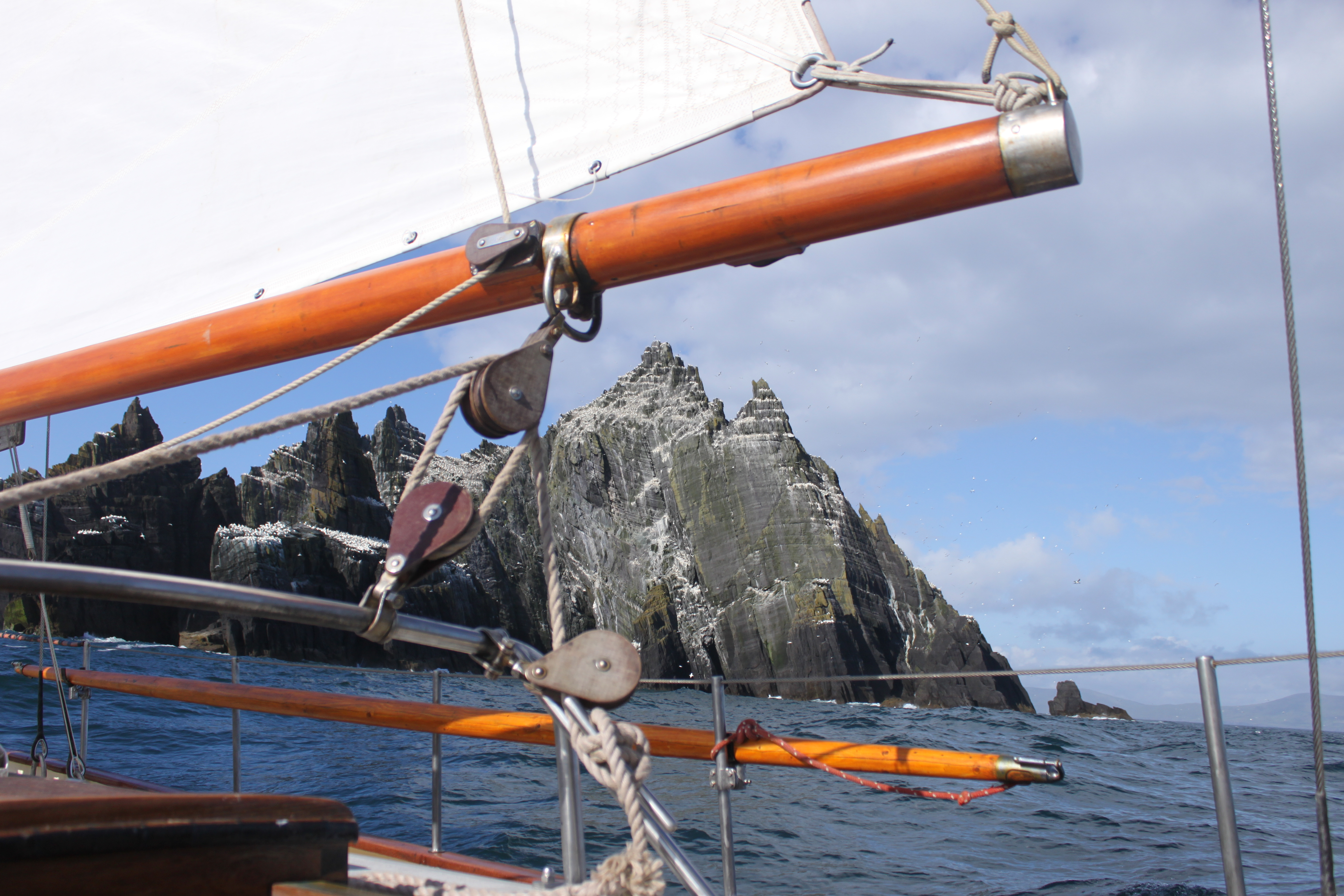
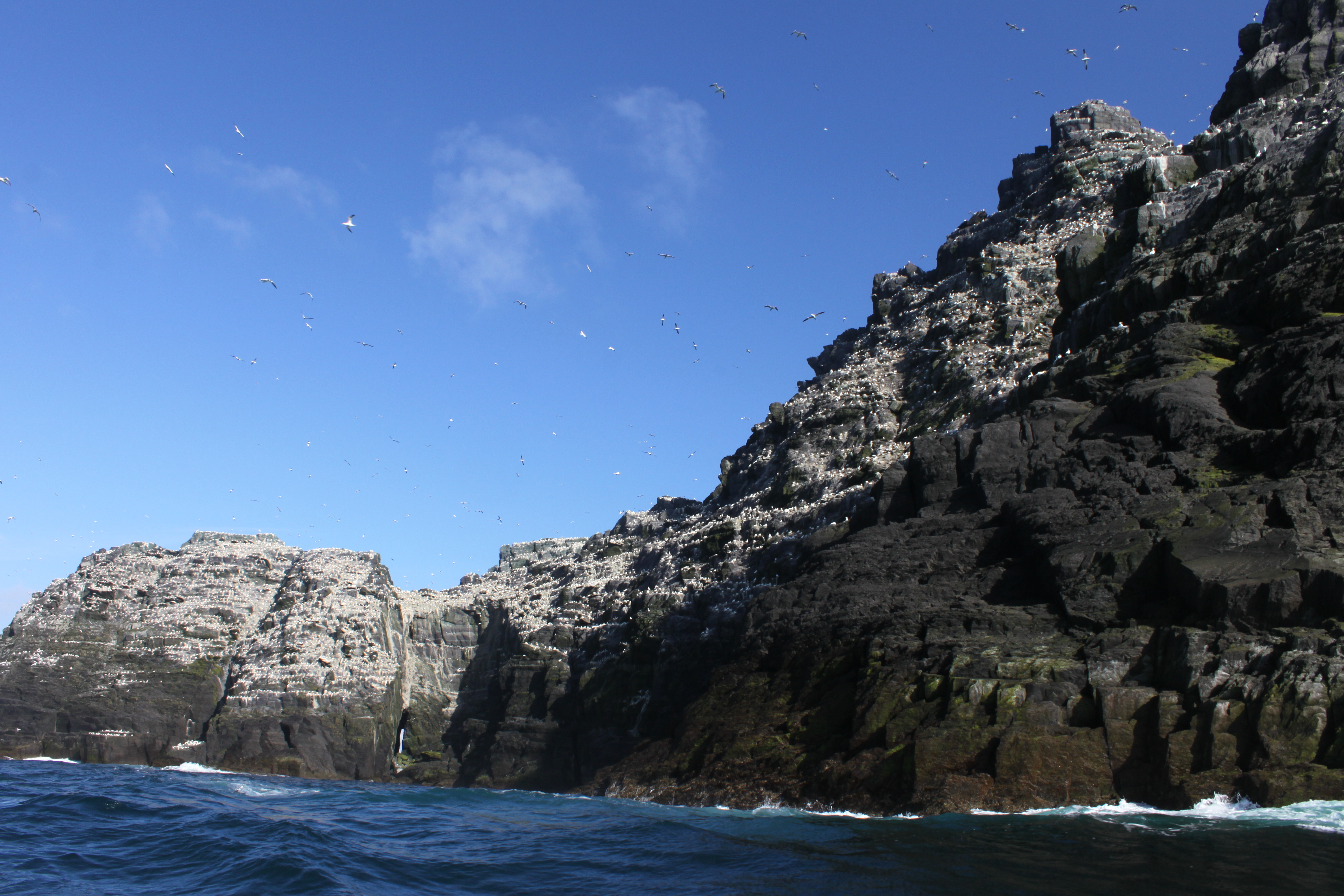
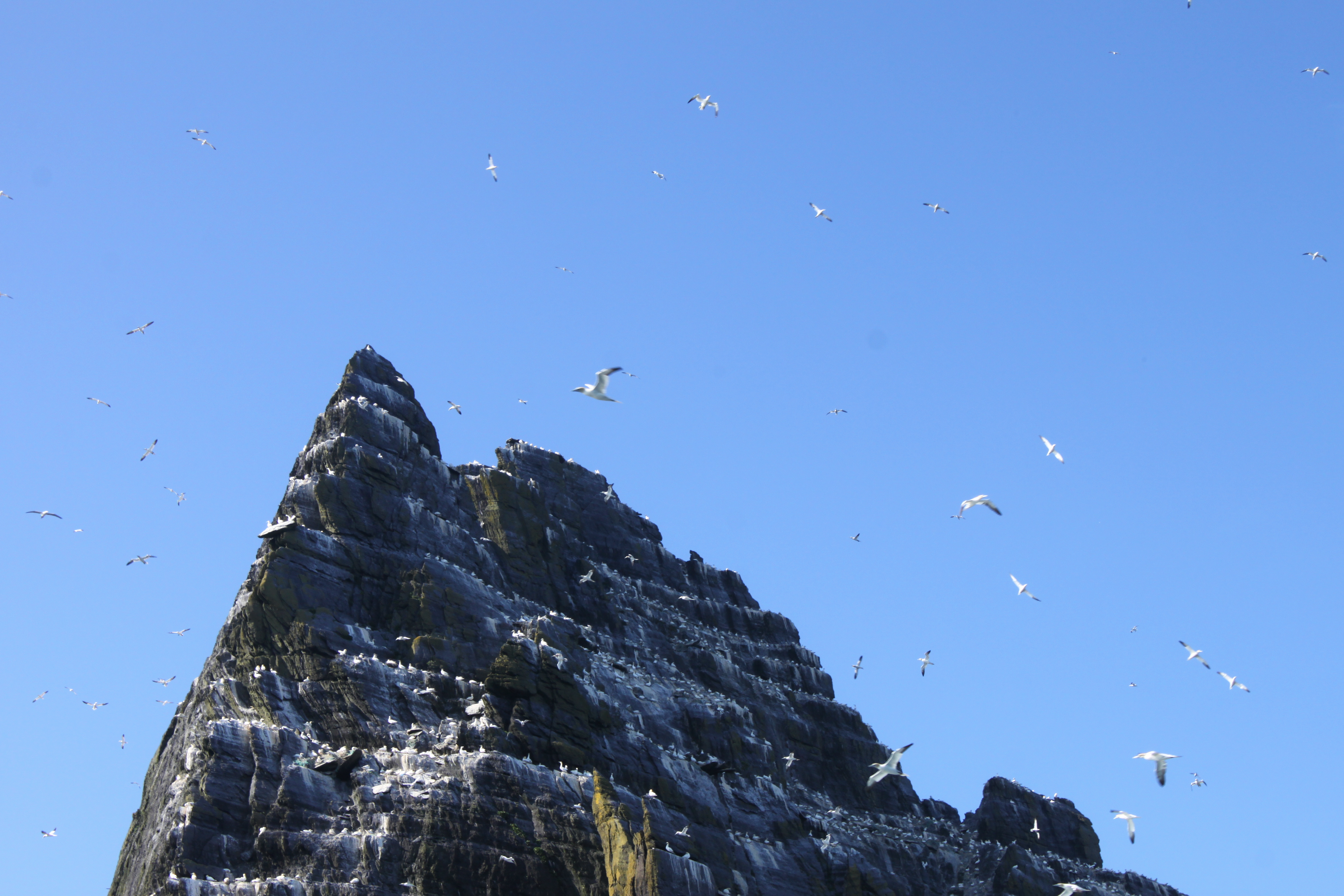
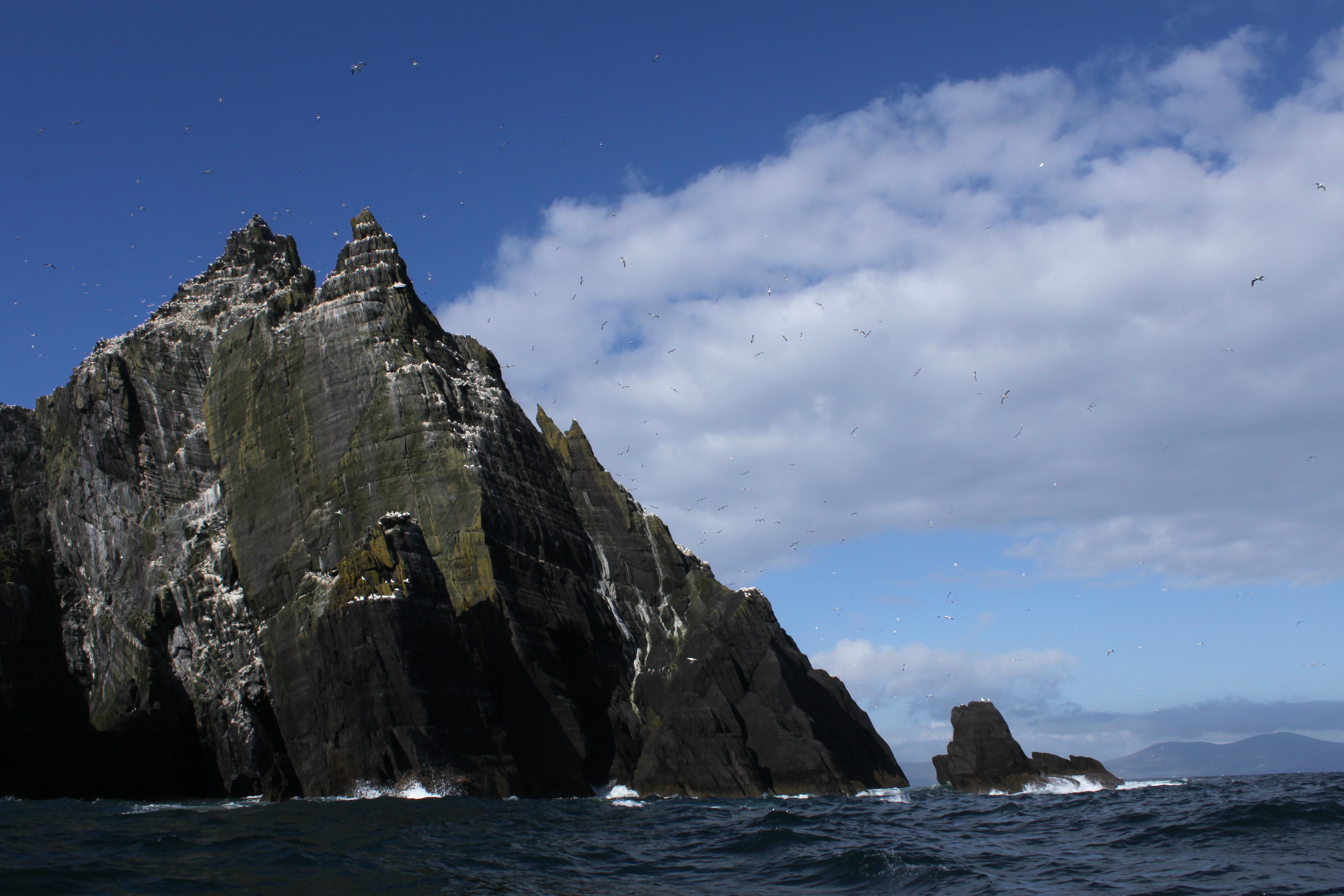
Lesser Skellig Island, bird shit galore
Puffin, how fly you?
Fight, you must, the gravity
of your proportions
High Seas Haiku no. 6
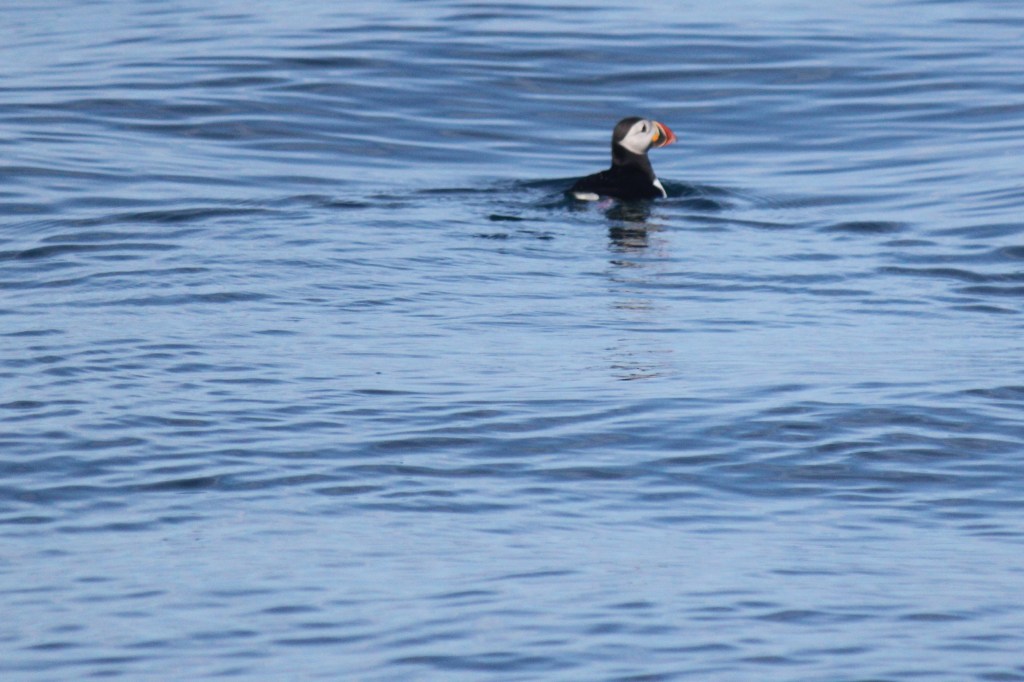
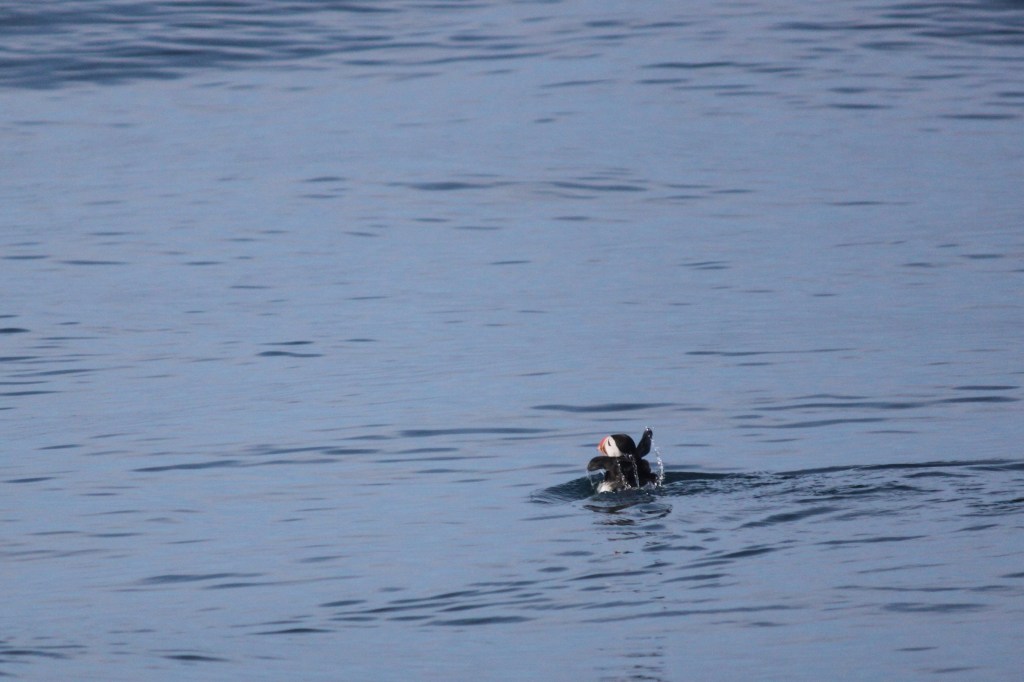
Leaving the Skelligs astern we turn north, heading for anchorage at Inishvickillane, 17 nm away. The wind is easing, and sun is out. Barometer reads 1020 and the thermometer is steady at 18 C; so much for a dreary Irish summer. The evening passes in a dozy succession of snacks, naps, attempted fishing, and looking out for cetaceans, all without a hand at the helm. Magic. Fishing is unsuccessful, and Hue admits the fault. She is cursed. Two months sailing in the South Pacific, and not a single fish aboard. Not a lousy albacore or mahi-mahi. She failed to mention this when discussing suitability for the trip…
We sail onto anchor under a full moon at 2345, no lights needed. The anchorage is in 16 m of water between Inishvickillane and Inishnabro (na bro?) Islands, a shallow shoal dampening the Atlantic westerly ground swell. Teddy rocks us to sleep in the liquid silver moonlight.
Tuesday 18 June – 0800
I’m awake first, and head topside to bask in a glorious still morning. With fishing line over the side, and Moitessier’s “Cape Horn – the logical route” in hand, I share my coffee with a raft of lazy puffins. The islands either side are fantastic, tilted slabs of granite topped with sparse pasture, their Atlantic faces made of sheer and jagged cliffs. Breakfast is followed by first round of underway boat chores. Nick and Hue break down and clean the paraffin stove, as Pierre and I lower and tighten the main-mast winch collar, adjust the compass height on the mizzen, lash the mainsail foot to the boom, and adjust spinnaker pole brackets. At midday we row past grey seals drifting aimlessly through the swaying kelp, heading ashore for a wander on Inishvickillane. Low pasture and clumps of pink thrift are interspersed with burrows and droppings (deer and rabbit). Limpet shells are dotted across the top of the island; Nick thinks wind-blown, I blame birds. We’re promptly asked to leave by a caretaker (we neglected to ask for permission, and forgiveness is not forthcoming), but linger atop the Atlantic cliffs, watching seals playing below. We row back and have a quick swim before weighing anchor and heading for Teraght Island.
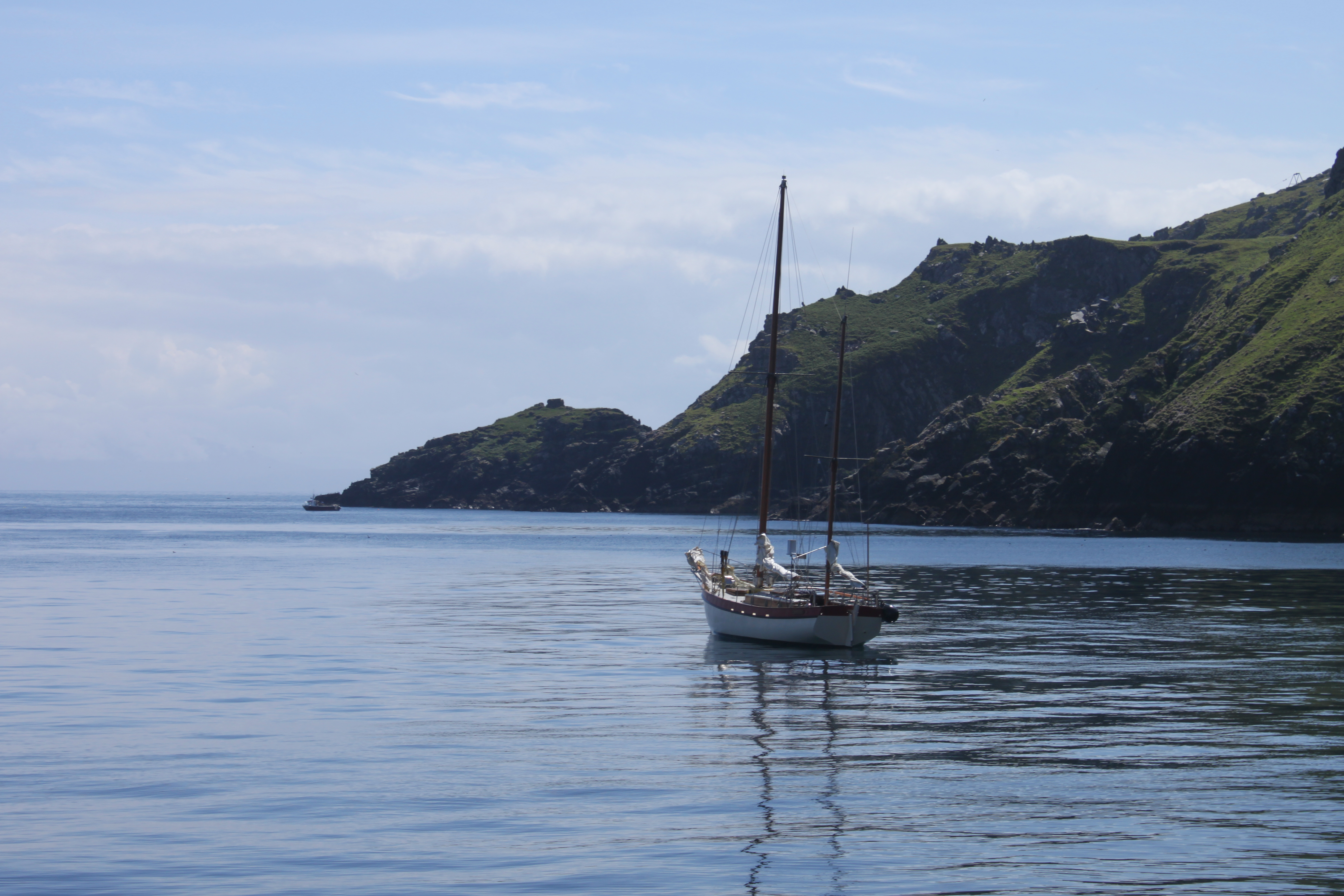
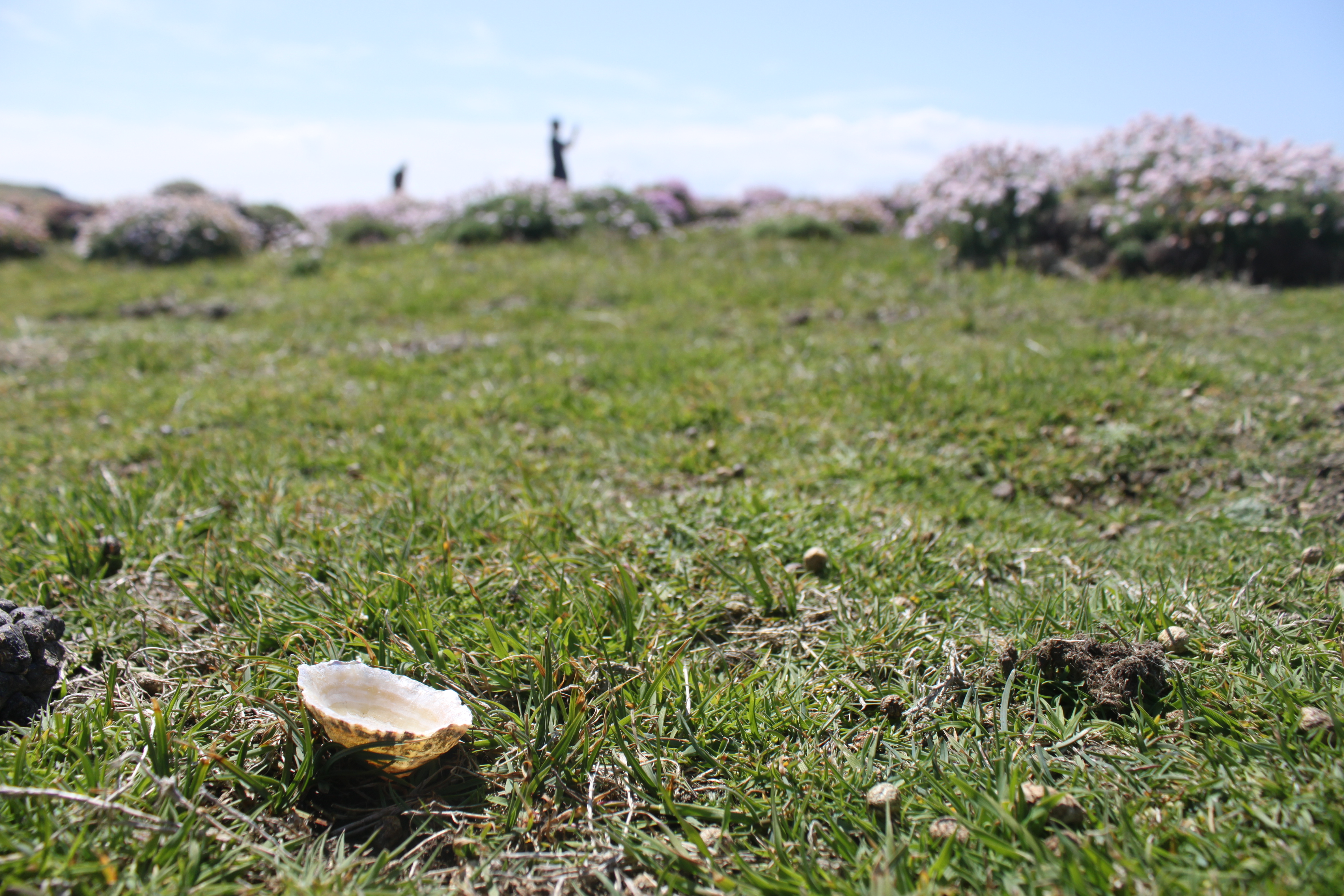
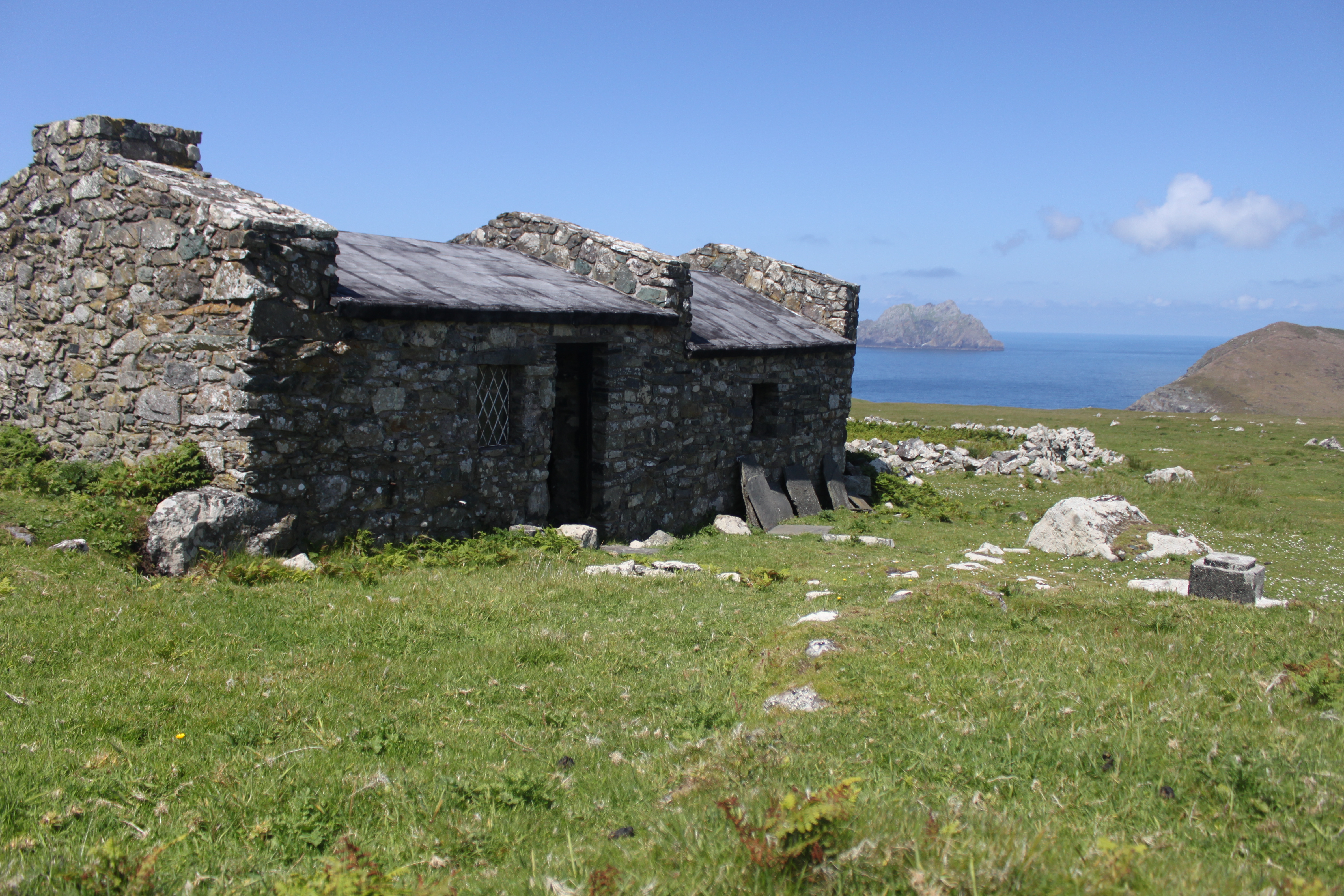
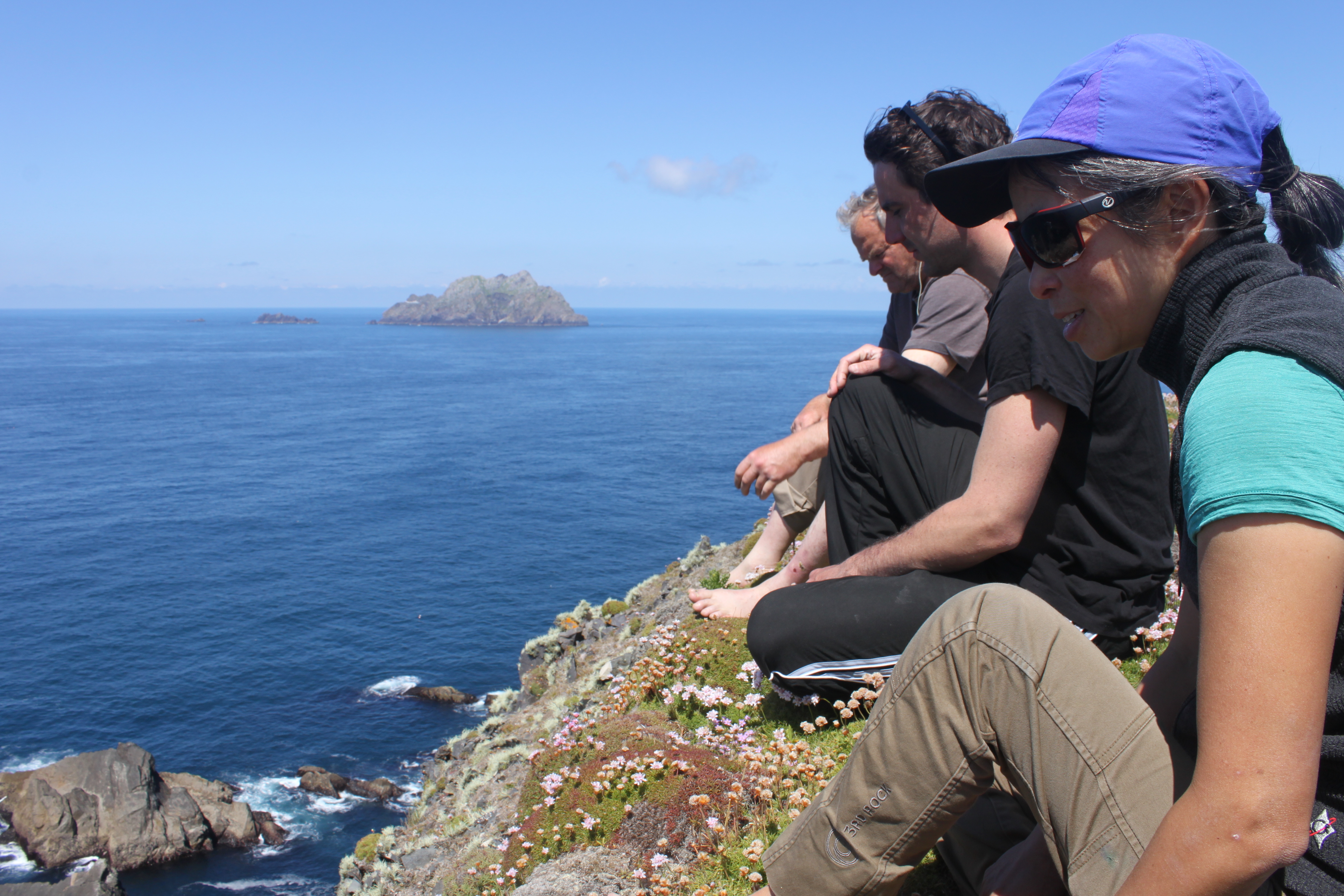
Illegitimate wandering on Inishvickillane
We motorsail in light breeze with only main and genoa set, with several sightings of large dark dolphins (?); my guess is pilot whales. By 1600 we have the staysail and mizzen full as well, and Teddy is cruising along on a magnetic course of 020, approximately 80 miles to Clifden left. Pierre remains above while the rest of us nap in peace. This is the life.
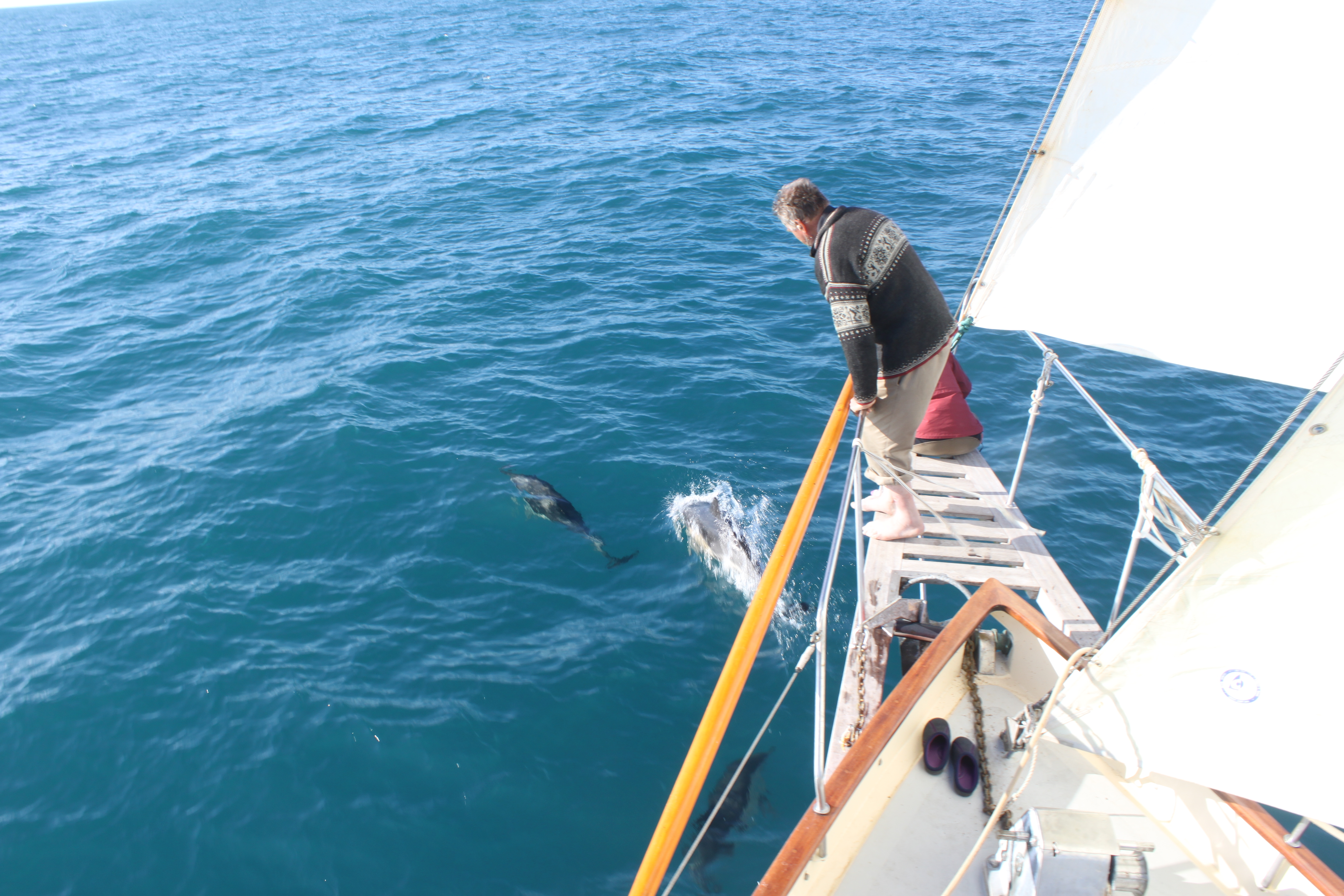
Pierre hurriedly wakes me at 1730. DOLPHINS! A dozen or so play on the bow for half an hour, as we overhang on the bowsprit, Teddy taking care of the rest. Can get it get any better? Only by a Minke whale crossing our bow to dive to starboard, as puffins scatter in our wake. Yea, OK Ireland, you go alright. Several more dolphin encounters interrupt our rest, as the breeze gradually fills. Estimated SOG of 4 knots, but we don’t really care. We’re going good, and we’ll get there. It’s freeing not constantly watching a speedo, and (almost) eases my need to constantly trim/ease/fiddle the sails. It’s an extension of what I love about offshore life, escape from the tyranny of digital screens. We’ve got paper charts, brass dividers, pilotage books and a handheld GPS. We’ve got the sea and the wind. And most of all, we’ve got Teddy.
We leave Pierre for his first solo night watch at 2200, although it’s still twilight, and get some sleep. I relieve Pierre at 0000. The moon is rising, wind is easing, and we drop the mizzen. We’re still on course of 020, although a light hand on the wheel is needed to stay slightly off the wind. The very bright full moon casts shadows of the mizzen shrouds onto the full main, and our wake sparks with phosphorescence. I spend a lot of the watch standing with my back against the starboard mizzen shrouds, watching our wake oscillate down the moonshine road. The sky darkens as the breeze freshens, and I swap with Nick at 0200.
Wednesday 19 June – 0600
Woken by Hue for another watch, Teddy’s still locked in the 2o degree groove. The rising sun casts a leaden lustre on the sea under an overcast sky, as gannets and terns inquire as to our destination. The GPS fix gives Slyne head off our starboard bow, which promptly comes into view from behind a squall at 0800. I wake Nick as we turn off the wind to 060, and drop the staysail to free the genoa. Coffee is brewed as the buildings of Clifden come into view. By 1230 we’re anchored off the Clifden boat club, and row ashore, Pierre jumps on a bus back to Cork after a hot seafood chowder. After restocking food and fishing lures, we head to Nick’s house for showers and dinner, after which we overload his tiny toyota with extra gear, and head back to Teddy. Three dinghy trips are required to get back to Teddy with all the extras, including: anchor #4, shotgun and ammo (‘ware the bears of Greenland), a bespoke ice-spear (for fending off pesky bergs and growlers), and Nick’s extra-cold weather one piece. Bed aboard by 2300, we’re heading for the Inishkeas and further North tomorrow.


Awesome blog and sailing
LikeLike
Mate hurry up and give us the skinny on your latest leg.
LikeLike
Hold ya horses, ya tea-swiggin’ land lubber. Na fair play, need to pull finger
LikeLike
Howdy to Dr.Nick Kats
My family knew his family
Fun to read these adventures !
Smooth sailing to y’all
Very best regards
maria sole
LikeLike